Gangster Stories vs. Noir Worldviews
"Often, gangsters are about the gang and the mob or the people within that. And noir is more interested, very broadly speaking, in... the system and the system being broader society, being the police, being, you know, culture at large and how you can or cannot necessarily win with it."
— Mel Killingsworth
(00:12:21)
· DZ-123: Flawed Characters in Noir
Genre Conventions As Flexible Tools
"So we found areas of those two scripts where the guru formulas, as we're referring to them, Snyder, Hauge, and Vogler, fit and some didn't fit. But I just wanted to say, because I don't think we covered it in our last episode, that we were stretching these formulas to fit at several points. And I think as soon as you are doing that, as soon as you're stretching them"
— Chas Fisher
(00:00:32)
· DZ-2: Do the Screenplay Gurus score big at the Box Office?
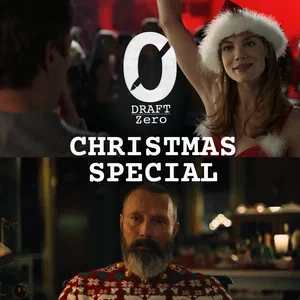
What magic do Christmas movies use to make them so rewatchable?
AI✦The hosts debate what actually defines a holiday movie versus a Christmas movie, establishing a metric where explicit Christmas signposts matter less than thematic alignment with the season’s emotional promise.✦
Listen if you want to understand what makes holiday films enduring parts of our seasonal rituals!
▶
More Info
In this “backmatter” episode of Draft Zero, Stu, Chas, and Mel Killingsworth embark on a festive exploration of what makes holiday films so engaging and so re-watchable that they can become part of our rituals. To that end, we breakdown the charm of of Christmas films like KISS KISS BANG BANG, RIDERS OF JUSTICE, and IT’S A WONDERFUL LIFE…
→
What effect does adding a ton of characters have on your story?
AI✦The hosts examine films whose genres do not conventionally require large ensembles, analyzing how these stories use ensemble in unconventional ways that work against or complicate genre expectations.✦
Listen if you're writing an ensemble storiy and want to understand how different characters serve different narrative and thematic functions!
▶
More Info
In Part 3 (the final part? Ha!) of our exploration into ensemble stories, Stu, Chas & Mel examine films whose genres do not conventionally require a ton of characters or that use those ensembles in unconventional ways. In particular, adding whole storylines that are separate from the main character’s story. To that end, we dive into three films that were horrifically snubbed by the Oscars: THE WOMAN KING, RIDERS OF JUSTICE and NOPE…
→
How does your opening sequence set up your audience?
AI✦The episode’s core insight is that these films open in ways that seem to defy their genre conventions and yet still provide all the setup needed to tell their stories.✦
Listen if you want to understand how great opening sequences establish character, genre, and theme while defying genre conventions
▶
More Info
Inspired by her tweet on how subversive an opening OCEAN’S ELEVEN has, Chas and Stu invited amazing writer/director Jessica Ellis onto the show to deep dive into opening sequences. How does a good opening setup character, genre, and theme…
→
How does Joker use melodramatic techniques to elevate its storytelling?
AI✦The episode interrogates what melodrama as a genre demands on the page, asking whether Joker satisfies or subverts the conventions that define it as a melodramatic work.✦
Listen if you're writing a character whose trauma becomes the engine of your entire narrative.
▶
More Info
Draft Zero return with their next YouTube livestream! Stu and Chas take a deep dive into JOKER and analyse the film through the story paradigm of melodrama. Is it a melodrama? Why or why not does that matter? And does that influence how it has been written on the page…
→
How does a screenwriter collaborate with a director on an existing property?
AI✦Aaron discusses how horror as a genre operates within WOLF CREEK 2, and the episode frames this conversation around what makes anti-horror distinct from traditional horror beats.✦
Listen if you're co-writing and need to figure out where your voice ends and your collaborator's begins.
▶
More Info
In this halloween special, Chas (sans Stu) is joined by a very special guest... Aaron Sterns the co-writer of WOLF CREEK 2 -- the big budget sequel to the infamous WOLF CREEK, also directed by Greg McLean. Chas and Aaron talk horror, anti-horror, collaboration, novels and how a screenwriter works within an existing franchise…
→
Are your story rules in your pilot strong enough to play out over the life of your show?
AI✦The discussion across THE SHIELD, THE WIRE, BREAKING BAD, and MAD MEN reveals how each pilot establishes its own genre contract--procedural, ensemble crime drama, transformation narrative, and period drama respectively--that signals what kind of show you’re watching.✦
Listen if you wanna know great television pilots establish the dramatic, literary, and cinematic rules that sustain their entire run.
▶
More Info
Stu and Chas move away from the world of features and dive into the Pilot Episodes of some (New) Golden Age Television: THE SHIELD, THE WIRE, BREAKING BAD, and MAD MEN. And we sneak in some discussion about ANGEL, THE SOPRANOS and GAME OF THRONES…
→
How can studying RomCom clichés teach us to subvert them?
AI✦Chas and Alli dissect the established patterns that define romantic comedy as a genre to understand what writers can work with or against.✦
Listen if you're writing a romcom and want to understand what makes this gentre tick.
▶
More Info
With Stu busy working on Hollywood blockbusters, Chas is joined by Alli Parker (script department on Aussie TV series and former co-ordinator of European #scriptchat) to unpick successful romcoms to see if they can illuminate a path for writers working in this struggling genre. Cheap to produce and potentially highly lucrative, Chas and Alli look at RomCom’s conventions to see what it may take to reinvigorate this genre…
→
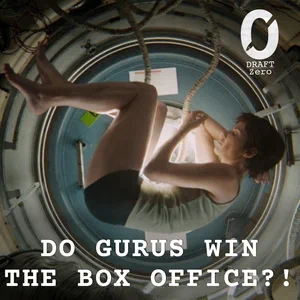
Do the biggest original films of 2013 follow more archetypal - or formulaic - structures?
AI✦Stu and Chas examine whether GRAVITY and FROZEN--the biggest original films of 2013--adhere to or subvert the genre conventions audiences expect from award nominees versus box office hits.✦
Listen if you need to know which guru frameworks actually deliver in Act Three.
▶
More Info
Part 2 of our Screenplay Gurus series takes the same lens from Part 1 — Vogler, Snyder and Hauge — and points it at the two highest-grossing original films of 2013: GRAVITY and FROZEN. No franchise, no sequel. Just the two films that audiences went to see in the biggest numbers that year, and the question of what their scripts actually look like when you run them against the guru formulas…
→
How can Secrets and Clues motivate characters?
AI✦Chas emphasizes fair play in locked-room mysteries, noting the audience should be able to figure out who did it without needing specialized knowledge like bridge rules, and that Wake Up Dead Man respects this contract while remaining complex.✦
Listen if you want to understand how hidden information drives character motivation and plot structure!
▶
More Info
“Getting information puts your character in danger. And danger rewards your character with information." — One of three ideas we steal from game design in this episode. In this two part series, we talk about how secrets, clues and hidden information motivate characters and may (or may not) help you plot from a character perspective. Part One (this episode) looks at WAKE UP DEAD MAN; while Part Two looks at SIDE EFFECTS, and the pilot episode of SHRINKING…
→
What craft tools make a low-budget, contained, period drama riveting?
AI✦Chas and Mel highlight how Blue Moon breaks nearly every format and structural convention around screenwriting--opening with a radio announcer, using unconventional slug lines, defying the biopic template--yet still attracted Academy recognition.✦
Listen if you want to understand how narrative POV, screenplay format, and dialogue craft can elevate a contained biopic into an Oscar-nominated film
▶
More Info
BLUE MOON is a talky, period-drama that film about an obscure songer-writer in the 1940s. Yet, it attracted world-class talent AND Academy Award nominations, including for it’s script. Join Chas & Mel as they explore how narrative POV, interweaving relationships, hooky dialogue, and even the screenplay format itself make the script for BLUE MOON so great…
→
How does Film Noir show us terrible people doing terrible things without endorsing it?
AI✦Mel and Chas trace how noir conventions--fedoras, venetian blinds, smoke-filled rooms, voiceover narration--persist across 100 years from Double Indemnity through Woman of the Hour, and how modern acting and directing choices don’t erase a film’s noir DNA.✦
Listen if you need audiences to root for characters who do terrible things
▶
More Info
Mel and Chas continue to explore what Noir (the genre) can teach writers of all other genres. In particular:…
→
How do the antagonistic forces in your story escalate distinctly from the protagonists' journey?
AI✦Kim and Stu map Noel Carroll’s Onset-Discovery-Confirmation-Confrontation horror cycle alongside TOMBS, showing how horror’s genre patterns align with and enrich the antagonistic escalation framework.✦
Listen to strengthen your story by focusing on the antagonistic forces in your script.
▶
More Info
We often struggle to develop the middle stages of a story. Could this be because we focus on our protagonists’ journeys and plot structure more than on how the antagonistic powers are awakened, wronged, discovered, gathering strength and revealing themselves…
→
How do you give your audience access to a lot of characters?
AI✦Each film represents a different genre with its own ensemble demands--team sports, murder mystery, slasher, and family comedy--revealing how genre shapes character servicing strategies.✦
Listen if you're writing ensemble stories and want to discover tools for giving all your characters adimension
▶
More Info
In Part 2 of our exploration into ensemble stories, Stu, Chas and Mel examine films whose plot and genre require a lot of characters. Thus we tackle a team sports film (PITCH PERFECT), a murder mystery (GLASS ONION), a slasher (SCREAM 2022) and a family holiday flick (THE FAMILY STONE)…
→
How can the same story feel different when you have more characters?
AI✦The hosts ask which genres inherently are ensembles, using films like OCEAN’S 11, DIRTY DOZEN, and SAVING PRIVATE RYAN to establish how genre shapes ensemble storytelling.✦
Listen if you're working on a story with multiple protagonists and want to understand what makes an ensemble different from a single-protagonist narrative
▶
More Info
In the first part of our series on ensembles, Chas, Stu and Mel start by laying the groundwork for our future episodes. And we begin by asking the seemingly innocuous question:
What do we mean by calling a story an ensemble?…
→
How do you maintain hope in the face of, er, screenwriting
AI✦The comparison of Andor versus Obi-Wan as Star Wars iterations engages with how genre conventions function and evolve within the same franchise.✦
Listen listen to hear why first acts keep shrinking--and whether yours should too
▶
More Info
Time for our annual backmatter episode, where we drop any ruse of any objectivity, and fully embrace our subjective opinions…
→
How can you use setups and payoffs to stitch your film together?
AI✦The multiverse storytelling framework demands a particular relationship between setup, payoff, and reversal that differs from linear narrative, and the episode examines how the film navigates those genre-specific requirements.✦
Listen to understand how setups, payoffs, and reversals create narrative cohesion even when your story is fkn bonkers.
▶
More Info
In this one-shot, Chas and Stu jump into the utter chaos of EVERYTHING EVERYWHERE ALL AT ONCE. Y’know, nultiverses, butt-plug action sequences, hot-dog fingers, a raccoon chef, a nihilist bagel. All the good stuff. And yet it lands emotionally in a way that feels inevitable…
→
How do you choose which project to start next?
AI✦Keeping genre fresh comes up as a direct topic, suggesting Stu and Chas discuss how to work within and against genre expectations.✦
Listen if you're starting a new co-writing relationship, managing multiple projects, or wondering how to prioritize your next screenplay.
▶
More Info
In their now-annual full backmatter episode, Stu and Chas let their hair down, drop the guise of objectivity, and allow themselves to have an even more subjective opinion about writing and the business of writing…
→
What can we learn from folk horror?
AI✦Stu and Chas dissect folk horror as a genre by examining what makes it distinct from other horror subgenres and how Aster leverages those conventions in Midsommar.✦
Listen if you want to understand how folk horror works as a genre and how Ari Aster uses it to explore grief and toxic relationships
▶
More Info
Draft Zero return with their next YouTube livestream! Stu and Chas are joined by previous guest (and successful screenwriter) C.S. McMullen for a deep dive into MIDSOMMAR! We analyse the film through the lens of Folk Horror, but tackle broader topics such as horror vs dread, rising tension, transgressions, unfilmables, and portraying toxic relationships…
→
How do I tell a powerful story where the protagonist cannot drive the plot?
AI✦Examining THE HANDMAID’S TALE, LADIES IN BLACK, and STRANGER THINGS allows the hosts to identify what distinguishes melodrama’s conventions from traditional hero-centered storytelling.✦
Listen if you want to write powerful stories centred on characters without much agency.
▶
More Info
Stu and Chas are joined by Stephen Cleary following his exploration into Melodrama, and together they try to reclaim the word from its pejorative meaning…
→
How does audience knowledge affect your character's motivations?
AI✦The conversation treats fan service as a genre convention specific to serialized storytelling, examining how it bends character motivation to meet audience expectations rather than internal logic.✦
Listen to understand how fan service weaponizes external knowledge against character logic.
▶
More Info
By Order 66: Chas and Stu are joined by special guest - filmmaker Mel Killingsworth - to talk all things Star Wars. Well. Focusing on The Mandalorian and The Rise of Skywalker and wherever else our tangents take us…
→
How do systems pressure your characters to change?
AI✦Though stereotypically associated with science-fiction, system antagonists appear across genres including drama (MUDBOUND), fantasy (THE LOBSTER), and genre hybrids, challenging assumptions about where societal conflict belongs.✦
Listen if you want to use how societal, governmental, or environmental forces as villains.
▶
More Info
This is Part Four (!!) of our Five Part Epic Exploration into antagonists forces and sources of conflict. In this episode we explore “system/world/society” antagonists. While stereotypically associated with science-fiction, these sources of conflict are found across genres…
→
What changes in your story if your antagonistic forces can't be bargained with?
AI✦By analyzing survival narratives and creature films, the episode maps how nature antagonists operate within and reshape genre expectations around resolution, victory, and what constitutes a meaningful ending.✦
Listen to understand why pressure--not obstacles--is what transforms a protagonist when they face an unstoppable force.
▶
More Info
In this Part Three of our Five Part Epic Exploration™ into antagonistic forces (and sources of conflict), Chas & Stu explore “nature” antagonists, including some supernatural ones. What became clear in doing the homework (and recording this episode
twice) was that the antagonistic forces - whether natural or supernatural - presented different narrative challenges to the protagonists if (a) they did not seem to make choices and (b) could not be bargained with or defeated…
→
How do you keep contained movies engaging?
AI✦The episode examines how different genres--drama, rom-com, action--adapt their conventional tools when confined to one space, using LOCKE, THE ONE I LOVE, and EVERLY as case studies across genre boundaries.✦
Listen if you're writing a contained thriller, drama, or any story limited to a single location
▶
More Info
Contained Thrillers* *seem to be a genre that never goes out of fashion. But being contained is not just limited to thrillers. It’s a way of telling stories on a lower budget, regardless of genre. So - while allegedly easier to make / get made - limiting a story to a single location also limits the tools that maintain an audience’s interest. Changing audience or character point of view, intercutting between locations or characters are all much harder (if not impossible) in contained films. So how do good contained films hook their audience and keep them…
→
How do screenwriters get away with using coincidences in their stories?
AI✦Stu and Chas examine how different genres have different tolerance levels for contrivance--what feels earned in a heist film like PULP FICTION might feel cheap in a character-driven drama.✦
Listen when you need to know which coincidences earn trust and which ones feel like cheating.
▶
More Info
Remember that time in THE DARK KNIGHT RETURNS when Bruce suddenly - magically - returned to Gotham, and you were like “WTF?!” Well, it turns out that many of the best films have moments that are just as coincidental or contrived (or a flock of Giant Eagles) and yet get away with it. Does Pixar’s “rule” that it is ‘cheating to use coincidences to get your characters out of trouble’, always apply…
→
How can the Trinity Syndrome help you write better secondary characters?
AI✦By analyzing female characterization across action films, sci-fi thrillers, and fantasy adventure, Emily and the hosts reveal how genre conventions can either lock female characters into functional roles or liberate them to have agency.✦
Listen when you're writing secondary female characters and need them to have more depth.
▶
More Info
Chas & Stu are joined by Bamboo Killer (aka Emily Blake) - one of the co-hosts of the
Chicks Who Script podcast. They take a critical look at secondary female characters in mainstream movies through the lens of the oft-cited Bechdel test and the new, less-cited, Trinity Syndrome. The Trinity Syndrome berates movies for creating a
“Strong Female Character With Nothing To Do” (like Trinity in the Matrix sequels) and raises a list of questions for filmmakers to ask themselves about their (female) characters…
→
Are there screenwriting lessons to be taken from analysing the work of Michael f-ing Bay?
AI✦The analysis of THE ROCK, THE ISLAND, and PAIN & GAIN reveals how Bay leverages and subverts action-thriller conventions to create commercial narratives that still contain functional story logic.✦
Listen to understand how one of the world's highest-grossing directors structures story, makes great villians, controls information flow, and makes visual decisions on the page
▶
More Info
Of course there are. How could there not be? After all, Michael Bay is the 3rd highest grossing director at the worldwide box office... of all time. Behind, y’know, Spielberg and stuff. How could a man of such credentials not know story? Or, so argues this week’s guest: the author of MICHAEL F-ING BAY: THE UNHERALDED GENIUS IN MICHAEL BAY’S FILMS... [drumroll]... the Bitter Script Reader…
→
How does setting up rules help you build a world?
AI✦The episode covers world-centric genres like sci-fi and fantasy alongside horror, crime drama, and romance, showing how each genre’s conventions shape which rules matter most in your opening pages.✦
Listen when your opening pages feel like exposition dumps (which is bad, okay?)
▶
More Info
In our most epic/longest episode yet, Chas and Stu tackle world building in films. Specifically, how the rules make something a world and not just a setting. Starting with world-centric genres like sci-fi and fantasy, we also cover horror, crime drama and - er - “other”. We discuss a variety of techniques for setting up the rules of the world, including cold opens, voiceover, title cards and outsider characters! We’ve limited ourselves to the opening 3-5 pages... mostly... because (so the theory goes) they’re the pages that teach the audience how to read/watch your story/film…
→
Is the MacGuffin truly interchangable, and how does it impact on your character writing?
AI✦Brad brings expertise to how the MacGuffin functions across action-adventure films specifically, showing that the 4th instalments failed partly because they misunderstood the genre’s demands on object choice.✦
Listen to discover why the MacGuffin's emotional weight--not its function--determines whether your audience cares enough to follow the entire adventure.
▶
More Info
Stu and Chas are joined by a special guest - Scriptmag contributor Brad Johnson - to discuss how the choice of the MacGuffin can impact on the quality of an action/adventure film. To test this thesis, our heroes compare the auspicious originals of two iconic franchise with their, um, less-than-auspicious 4th instalments (in other words we compare RAIDERS OF THE LOST ARK with KINGDOM OF THE CRYSTAL SKULL and THE CURSE OF THE BLACK PEARL with ON STRANGER TIDES) as well as look at two recent & original entries into the genre, namely NATIONAL TREASURE and PRINCE OF PERSIA…
→
Can forcing your audience to ask questions - and then answering them - trigger an emotional response?
AI✦Thrillers emerge as the testing ground because they change audience POV more than any other genre, making them the ideal laboratory for understanding how this craft tool works.✦
Listen to learn about the most powerful tool in screenwriting: narrative POV.
▶
More Info
Stu and Chas delve into audience point of view - not character point of view! Does your audience know more, less or the same as your characters? And does changing this within a scene trigger or heighten the desired emotional response…
→
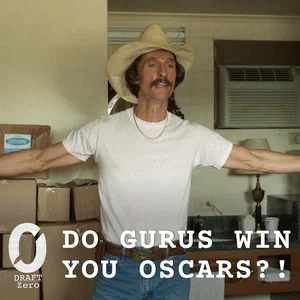
Do Oscar-Nominated screenwriters follow the structural formulas prescribed by the 'gurus' and books?
AI✦Stu observes that Philomena ‘could be written as a thriller’ with nuns as antagonists, but instead uses ‘people not wanting to speak to them’ as resistance, upending the genre’s opposition mechanics.✦
Listen if you want to know whether Blake Snyder, Michael Hauge and Christopher Vogler's structural theories actually apply to Academy Award-nominated screenplays
▶
More Info
Three of the most widely read structure books in screenwriting — Snyder’s
Save the Cat, Vogler’s
The Writer’s Journey, and Michael Hauge’s
Six Stages — all make essentially the same claim: this is how great films are built. In our debut episode, we run that claim against two Oscar-nominated films to see if it holds: PHILOMENA and DALLAS BUYERS CLUB…
→
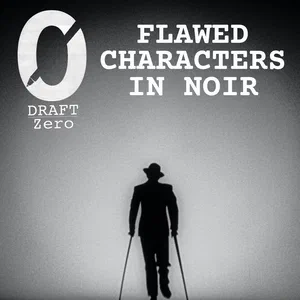
What can Film Noir teach us about character arcs and audience engagement?
AI✦Chas deliberately avoids turning this into film history by focusing on how noir as ‘such a trope genre’ uses specific narrative devices--like tipping its hand to the transgression upfront--to manage audience engagement with flawed protagonists.✦
Listen if you want to write morally compromised characters without endorsing their choices.
▶
More Info
In this two part series, Mel and Chas use Noir (the genre) as a lens to interrogate flawed characters. How can characters doing reprehensible things still engage audiences? How can you ensure representation isn’t endorsement? And whether these characters undergo transformative arcs, or simply reveal their true natures…
→
How can you apply horror ideas to action and comedy?
AI✦By applying a horror framework to action and comedy, Stu challenges the idea that genre conventions are rigid, showing how TOMBS reveals structural patterns that work across seemingly incompatible forms.✦
Listen to learn how thinking of your hero as the horror (for your villains) makes your script dynamic.
▶
More Info
In this episode Chas, Stu and guest Kim Ho continue their exploration into the power(s) of antagonism and how focusing on them can develop story…
→
How do you make extended technical scenes funny on the page?
AI✦Mel distinguishes between farce, screwball, and slapstick as different types of physical comedy, with Bringing Up Baby serving as a screwball example that uses vehicles and repeated action to establish the comedic world.✦
Listen to learn how formatting--white space, caps, dashes--becomes your comedy toolkit without a director.
▶
More Info
Mel joins Chas to tackle physical comedy. We limited our homework selection to extended scenes (as opposed to moments and sight gags) in live action projects and – with the help of our Patreons – selected early sequences from BRINGING UP BABY, the pilot for HAPPY ENDINGS and that wonderful food poisoning scene in BRIDESMAIDS…
→
HOw does a writer work with a director (on a short film?)
AI✦THE SNIP is a rom-com working within genre expectations--a relationship-based comedy with high personal stakes--and the discussion addresses how genre shape both the writing and the production.✦
Listen if you are thinking of producing your own short film!
▶
More Info
This episode, Chas steps down as co-host (kinda) and is interviewed by Stu as a guest, alongside director Ben Mizzi, about the short rom-com that Chas wrote and Ben directed & produced. The episode covers taking an idea from pitch to screen, working with a director, directing performance on the page, and marketing and distribution strategies for short films…
→How can your first act effectively establish your character journey?
AI✦By comparing three MCU origin films alongside THOR, the hosts isolate which first-act conventions the franchise has standardized and where individual films break from that template.✦
Listen if your first act exposition feels clunky--the MCU has a schema for burying backstory inside character introductions.
▶
More Info
First Acts are hard. They have to set so much in motion, especially setting up characters. To help them understand how to write effective first acts better, Stu and Chas turn their analytical gaze to a franchise that has been refining and reiterating its first act “schema” for over a decade... THE MARVEL CINEMATIC UNIVERSE…
→
When you're an emerging filmmaker, what are different ways to tackle a "career"?
AI✦By examining different formats--shorts, features, web content--Chas and Stu implicitly consider how genre and medium conventions shape what stories emerging filmmakers can realistically execute.✦
Listen when you're deciding between shorts, features, and web content--and need to know which format actually builds a sustainable creative practice.
▶
More Info
It’s our Holiday Special! In this episode (recorded December 2014), Chas and Stu break all the rules. No homework. No pages. No empirical analysis. They reluctantly but boldly reflect over the first year of Draft Zero and how it has influenced their ‘careers’ (such as they are). They also engage in a heated debate on whether a short film, a micro-budget feature or web-based content is the best way to go in terms of pushing a filmmaking career forward…
→
What, exactly, is Draft Zero?
AI✦Both hosts acknowledge that screenwriting books rely on formulas and three-act structure, which Draft Zero explicitly moves away from in favor of audience-focused, technique-driven analysis.✦
Listen if you're new to the podcast and want to understand our philosophy on screenwriting craft!
▶
More Info
Welcome to Draft Zero. A message from 2019 to those starting with our first episodes dating from 2014. We’ve learned a lot in five years. So where do you begin…
→