The Work You Skip With Known Transgressions
"Because they've told you that the transgression already happened, You don't need to carry the audience along with a pure introduction into this character. That first decision to do wrong, you don't have to put the work in, in terms of backstory or given circumstances."
— Chas Fisher
(00:31:28)
· DZ-123: Flawed Characters in Noir
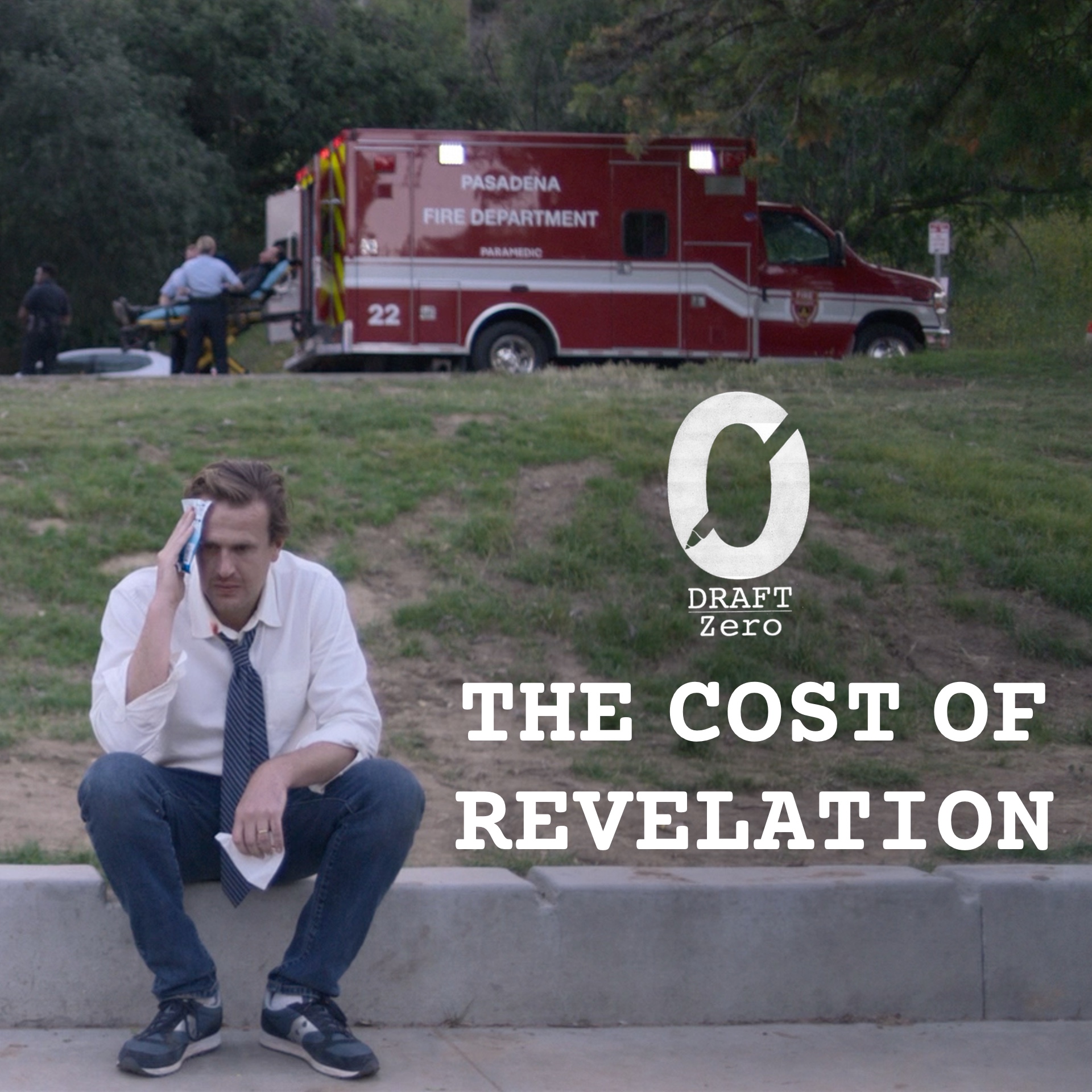
What does it cost a character to find something out, or to say it?
AI✦Chas identifies a gap between what Dr. Banks thinks he knows about Emily versus what he actually knows, showing how misreading a character’s motivation can drive a whole half of the film.✦
Listen to learn the emotional impact of revealing secrets vs discovering them.
▶
More Info
In this episode Stu, Chas and Mel apply the Landmark–Hidden–Secret framework (from DZ-126) across two very different genres: the thriller SIDE EFFECTS (2013) and the tragicomic pilot of SHRINKING…
→
How can Secrets and Clues motivate characters?
AI✦Stu, Chas, and Mel break down how Benoit Blanc is pulled through the story by his need to solve the case while Father Judd is pushed through against his will to prove innocence--two distinct motivation engines for dual protagonists.✦
Listen if you want to understand how hidden information drives character motivation and plot structure!
▶
More Info
“Getting information puts your character in danger. And danger rewards your character with information." — One of three ideas we steal from game design in this episode. In this two part series, we talk about how secrets, clues and hidden information motivate characters and may (or may not) help you plot from a character perspective. Part One (this episode) looks at WAKE UP DEAD MAN; while Part Two looks at SIDE EFFECTS, and the pilot episode of SHRINKING…
→
How does Film Noir show us terrible people doing terrible things without endorsing it?
AI✦The episode isolates voiceover and given circumstances as tools that contextualize why characters make incredibly stupid or morally grey choices for understandable reasons.✦
Listen if you need audiences to root for characters who do terrible things
▶
More Info
Mel and Chas continue to explore what Noir (the genre) can teach writers of all other genres. In particular:…
→
What can Film Noir teach us about character arcs and audience engagement?
AI✦Neff’s motivation to help Phyllis boils down to ‘I would like to sleep with you,’ and Mel emphasizes he’s ‘just lying to himself’ about the nobler justifications he constructs for the murder.✦
Listen if you want to write morally compromised characters without endorsing their choices.
▶
More Info
In this two part series, Mel and Chas use Noir (the genre) as a lens to interrogate flawed characters. How can characters doing reprehensible things still engage audiences? How can you ensure representation isn’t endorsement? And whether these characters undergo transformative arcs, or simply reveal their true natures…
→
How can you apply horror ideas to action and comedy?
AI✦Chas identifies how Greg’s insecurity drives his bad decisions in MEET THE PARENTS, and Stu traces Terry’s motivation in REBEL RIDGE from saving his cousin to confronting systemic corruption--showing how TOMBS clarifies what characters actually want at each stage.✦
Listen to learn how thinking of your hero as the horror (for your villains) makes your script dynamic.
▶
More Info
In this episode Chas, Stu and guest Kim Ho continue their exploration into the power(s) of antagonism and how focusing on them can develop story…
→
How do character goals, tactics, and fears create subtext automatically?
AI✦Chas, Stu, and Tom dissect how character goals and the tactics characters deploy to achieve them--what they want and how they’re trying to get it--create the scaffolding for everything else in a scene.✦
Listen if you're struggling to write subtext without it feeling forced!
▶
More Info
Or, how focusing on good drama will result in good subtext. We often hear how subtext is important for good screenwriting. We’re here to tell you it isn’t. Good subtext is a result of good drama, and your focus should be on creating that good drama. But how…
→

How does ending your story on the climax affect audience experience?
AI✦The discussion hinges on moments where what’s on the page doesn’t match what’s on screen, creating a gap between stated and obscured motivation that becomes thematically significant.✦
Listen to understand how withholding resolution can make your story great!
▶
More Info
While Stu is on show, Mel and Chas sit down to analyse the meaning behind the ending of 2024’s CHALLENGERS, especially when - upon reading the script - the most impactful moment of the ending on screen (for Chas in particular) is not written on the page…
→
How is the effect of breaking the 4th wall different to voiceover?
AI✦Rather than assume characters break the fourth wall to confess, Mel argues that Fleabag speaks to understand and explain herself, working out what she wants or needs in that moment, which reframes the device as a window into motive rather than mere exposition.✦
Listen to understand how breaking the 4th wall directly involves the audience in a character's emotional present.
▶
More Info
As part of our series on how filmmakers can directly communicate to the audience, we finally examine the most blatant tool of them all: when character look directly down the barrel of the camera… and thus look directly at
us, the viewer. Chas, Stu and Mel take the craft tools/levers they identified in previous episodes and use them to examine the tv-version-of HIGH FIDELITY (“Top Five Breakups”), ABBOTT ELEMENTARY (“Attack Ad)”) and - of course - FLEABAG…
→
How can you use voiceover without it feeling like a cheat?
AI✦Voiceover becomes a tool for exposing what characters actually want beneath the surface, and Mel identifies how the timing of that voice determines whether we trust the narrator’s interior truth.✦
Listen to explore how voiceover can set tone, reveal character, enhance empathy, and create tension.
▶
More Info
How can you use Voiceover without it feeling like a cheat?…
→
What are the different ways a filmmaker can ask something of the audience?
AI✦Mel and Stu repeatedly return to the dramatic purpose driving communication: what does the speaker want from the audience, and how does that differ when they’re aware they’re being listened to?✦
Listen if you've wondered what a character actually wants when they're talking directly to the audience!?
▶
More Info
What are the different ways a filmmaker can ask something of the audience…
→
What is the difference between choice and decision when it comes to characters?
AI✦The episode examines how dramatising the considered decision itself--the knowing part between choice and consequence--reveals what’s actually driving your character’s actions.✦
Listen how the separation of choice, decision, and consequence (for a character) creates emotional impact.
▶
More Info
In order to better understand dramatising of character, Chas and Stu take a very draft zero look at very specific tool: choices and decisions. We analyse three films through the decisions made by their characters. In particular, how the audience understanding of: the choice available, the considered decision itself, and the consequence changes how we feel about these characters. And how separating those three things can create different emotional effects on your audience…
→
How does audience knowledge affect your character's motivations?
AI✦The episode’s central question asks how audience knowledge affects character motivations, making this the core craft lens for examining Poe, Rey, Kylo, and Palpatine across these serialized stories.✦
Listen to understand how fan service weaponizes external knowledge against character logic.
▶
More Info
By Order 66: Chas and Stu are joined by special guest - filmmaker Mel Killingsworth - to talk all things Star Wars. Well. Focusing on The Mandalorian and The Rise of Skywalker and wherever else our tangents take us…
→
HOw does a writer work with a director (on a short film?)
AI✦The short’s premise hinges on a protagonist making a major life decision without telling his wife, and Chas and Ben examine what drives that choice and how it sets the emotional stakes.✦
Listen if you are thinking of producing your own short film!
▶
More Info
This episode, Chas steps down as co-host (kinda) and is interviewed by Stu as a guest, alongside director Ben Mizzi, about the short rom-com that Chas wrote and Ben directed & produced. The episode covers taking an idea from pitch to screen, working with a director, directing performance on the page, and marketing and distribution strategies for short films…
→
How can characters be their own antagonist?
AI✦LITTLE MISS SUNSHINE, SHAME, and MONSTER all feature protagonists whose motivations are fundamentally at odds with themselves, which Chas and Stu use to illuminate how self-antagonism functions.✦
Listen if you want to understand how protagonists can serve as their own antagonist and how antagonistic forces shape a character's journey
▶
More Info
In Part Two of our Five Part Epic Exploration™ into antagonists, Chas & Stu take a look at “vs self” stories. Stories where the protagonist (or main character) serves as their own antagonist as well as the antagonist for those around them…
→
What makes a strong human antagonist?
AI✦Understanding what drives an antagonist to oppose your protagonist is central to the episode, as the hosts examine why figures like Hans Gruber and Annie Wilkes do what they do.✦
Listen if you want to understand how to craft compelling antagonists who oppose your protagonist through direct human conflict
▶
More Info
Prompted by a listener (and patron of the podcast) question, Stu and Chas dive into antagonistic forces. And because Draft Zero does not do anything by halves, this is Part One of a Five Part Epic Exploration™ into antagonists; namely: vs humans, vs self, vs nature/supernatural, vs systems and “other”. aka the classic narrative conflicts…
→

How can your first act effectively establish your character journey?
AI✦Understanding how wounds and flaws drive character motivation is central to the episode’s argument about why MCU first acts work--the character’s damage becomes the engine of their story.✦
Listen if your first act exposition feels clunky--the MCU has a schema for burying backstory inside character introductions.
▶
More Info
First Acts are hard. They have to set so much in motion, especially setting up characters. To help them understand how to write effective first acts better, Stu and Chas turn their analytical gaze to a franchise that has been refining and reiterating its first act “schema” for over a decade... THE MARVEL CINEMATIC UNIVERSE…
→
How do tactics make your characters and scenes more dynamic?
AI✦Understanding what characters want in a scene and how they try to get it exposes their motivational logic and reveals who they are under pressure.✦
Listen to learn how a character's tactics reveal who they are under pressure--and how their changing tactics reveals their growth.
▶
More Info
In this episode, Stu and Chas turn their gaze to the “tactics” that characters use in scenes to get what they want. Tactics are
how the characters try to achieve their goals and (we reckon) can be revealing of the essence of their character. The shifting and thwarting of tactics can make scenes more dynamic; while over the course of a story, the changing of tactics can reflect the growth of characters... even if their goal stays the same…
→
How can you successfully integrate exposition into your story?
AI✦Understanding why characters act provides a natural vehicle for exposition, and Stu and Chas use real scenes to show how character desires and backstories can justify why information gets revealed when it does.✦
Listen if your exposition scenes feel like information dumps disguised as dialogue.
▶
More Info
In Draft Zero’s first two part episode, Stu & Chas take an in-depth look at one of screenwriting’s most common challenges: EXPOSITION. For many stories there are pre-existing facts that need to be communicated to the audience — whether those facts be about the rules of the world, the nature of a location, character motivations, character backstories or just character names. So how have great writers made exposition move the story forward, rather than stopping it to tell the audience stuff they need to know…
→
How can studying RomCom clichés teach us to subvert them?
AI✦The deep analysis of films like When Harry Met Sally and 500 Days of Summer reveals how character desire drives the romantic comedy forward and keeps audiences invested.✦
Listen if you're writing a romcom and want to understand what makes this gentre tick.
▶
More Info
With Stu busy working on Hollywood blockbusters, Chas is joined by Alli Parker (script department on Aussie TV series and former co-ordinator of European #scriptchat) to unpick successful romcoms to see if they can illuminate a path for writers working in this struggling genre. Cheap to produce and potentially highly lucrative, Chas and Alli look at RomCom’s conventions to see what it may take to reinvigorate this genre…
→
How can we make our screenwriting more appealing to Actors?
AI✦The episode examines character spines and objectives through scenes from August: Osage County, showing how Tracy Letts writes characters with clear and compelling inner drives.✦
Listen to understand how writers can craft more compelling material for actors (and how they approach scripts)
▶
More Info
In this episode, Chas and Stu are joined by a very special guest, SARAH SNOOK - star of Succession, Predestination, Jessabelle, and Oddball, amongst many others - to discuss ACTING and it’s relationship with WRITING…
→
What is it about Tarantino's *writing* that elevates his work?
AI✦Understanding what drives Tarantino’s characters--and what they’re concealing--becomes central to understanding how his scripts generate their particular dramatic irony.✦
Listen to steal Tarantino's technique for planting details that detonate as payoffs three scenes later.
▶
More Info
Chapter 1: Of Milk and Men…
→
Is the MacGuffin truly interchangable, and how does it impact on your character writing?
AI✦Brad Johnson and the hosts demonstrate that what the protagonist wants--the MacGuffin itself--directly shapes whether an action-adventure film succeeds or fails at the character level.✦
Listen to discover why the MacGuffin's emotional weight--not its function--determines whether your audience cares enough to follow the entire adventure.
▶
More Info
Stu and Chas are joined by a special guest - Scriptmag contributor Brad Johnson - to discuss how the choice of the MacGuffin can impact on the quality of an action/adventure film. To test this thesis, our heroes compare the auspicious originals of two iconic franchise with their, um, less-than-auspicious 4th instalments (in other words we compare RAIDERS OF THE LOST ARK with KINGDOM OF THE CRYSTAL SKULL and THE CURSE OF THE BLACK PEARL with ON STRANGER TIDES) as well as look at two recent & original entries into the genre, namely NATIONAL TREASURE and PRINCE OF PERSIA…
→
Can one scene be the key to unlocking the whole story?
AI✦Stephen’s observation hinges on having your characters figured out first, meaning their motivations must be clear enough that they’ll naturally reveal your story’s architecture in a single scene.✦
Listen if you want to understand how a single key scene between protagonist and antagonist can unlock the entire structure of your story!
▶
More Info
Can one scene be the key to unlocking the whole story…
→
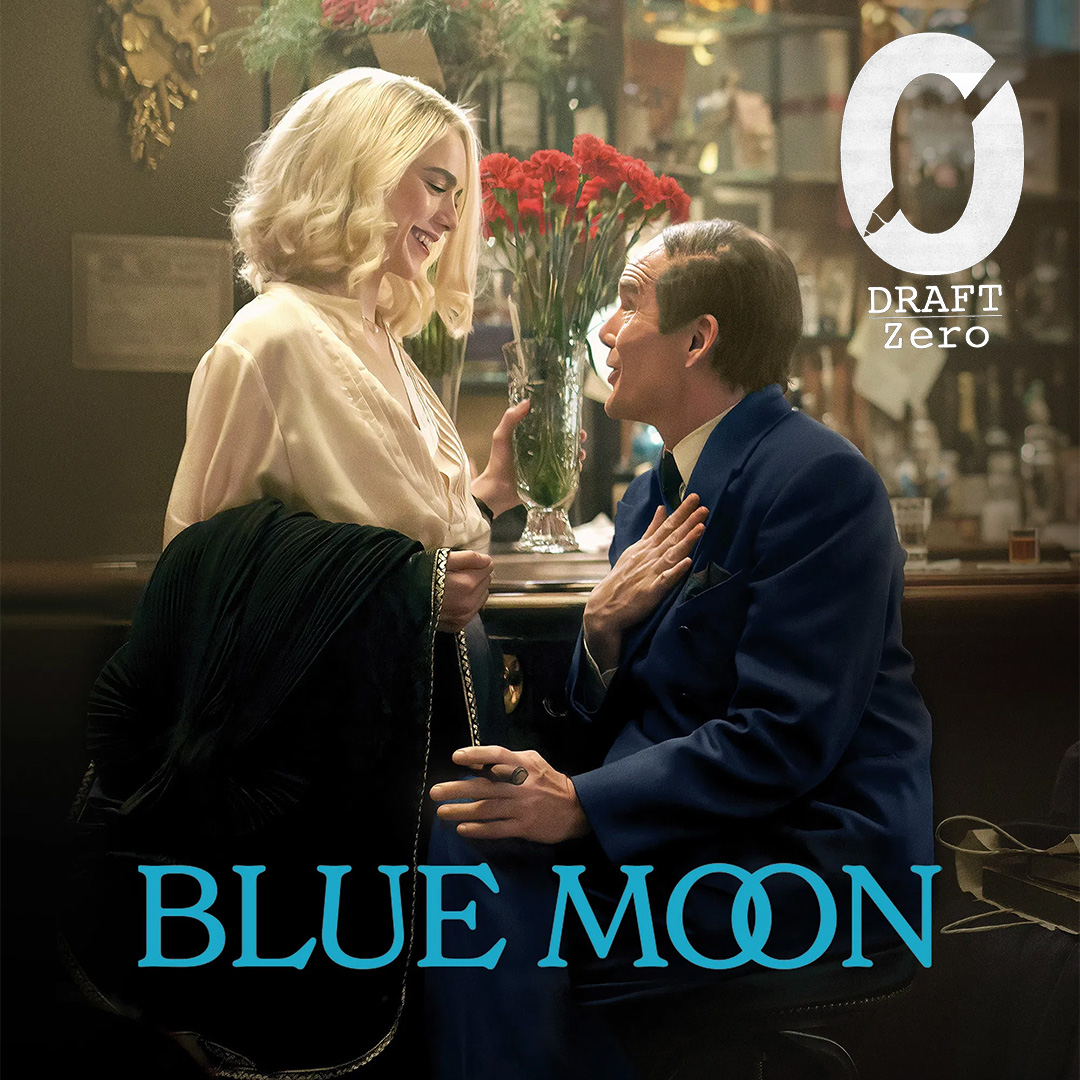
What craft tools make a low-budget, contained, period drama riveting?
AI✦Mel and Chas examine how Larry’s motivations remain deliberately ambiguous--whether he’s genuinely trying to reconcile with Rogers or unconsciously sabotaging himself, whether the party is born of connection or performance--and how this moral complexity keeps him from being a simple tragic figure.✦
Listen if you want to understand how narrative POV, screenplay format, and dialogue craft can elevate a contained biopic into an Oscar-nominated film
▶
More Info
BLUE MOON is a talky, period-drama that film about an obscure songer-writer in the 1940s. Yet, it attracted world-class talent AND Academy Award nominations, including for it’s script. Join Chas & Mel as they explore how narrative POV, interweaving relationships, hooky dialogue, and even the screenplay format itself make the script for BLUE MOON so great…
→
How do the antagonistic forces in your story escalate distinctly from the protagonists' journey?
AI✦Rather than mapping motivation to a single protagonist arc, Kim highlights how Sinners’ characters each choose from survive, solve, or save in response to the same antagonistic escalation--giving you multiple engines for character decision within one story.✦
Listen to strengthen your story by focusing on the antagonistic forces in your script.
▶
More Info
We often struggle to develop the middle stages of a story. Could this be because we focus on our protagonists’ journeys and plot structure more than on how the antagonistic powers are awakened, wronged, discovered, gathering strength and revealing themselves…
→
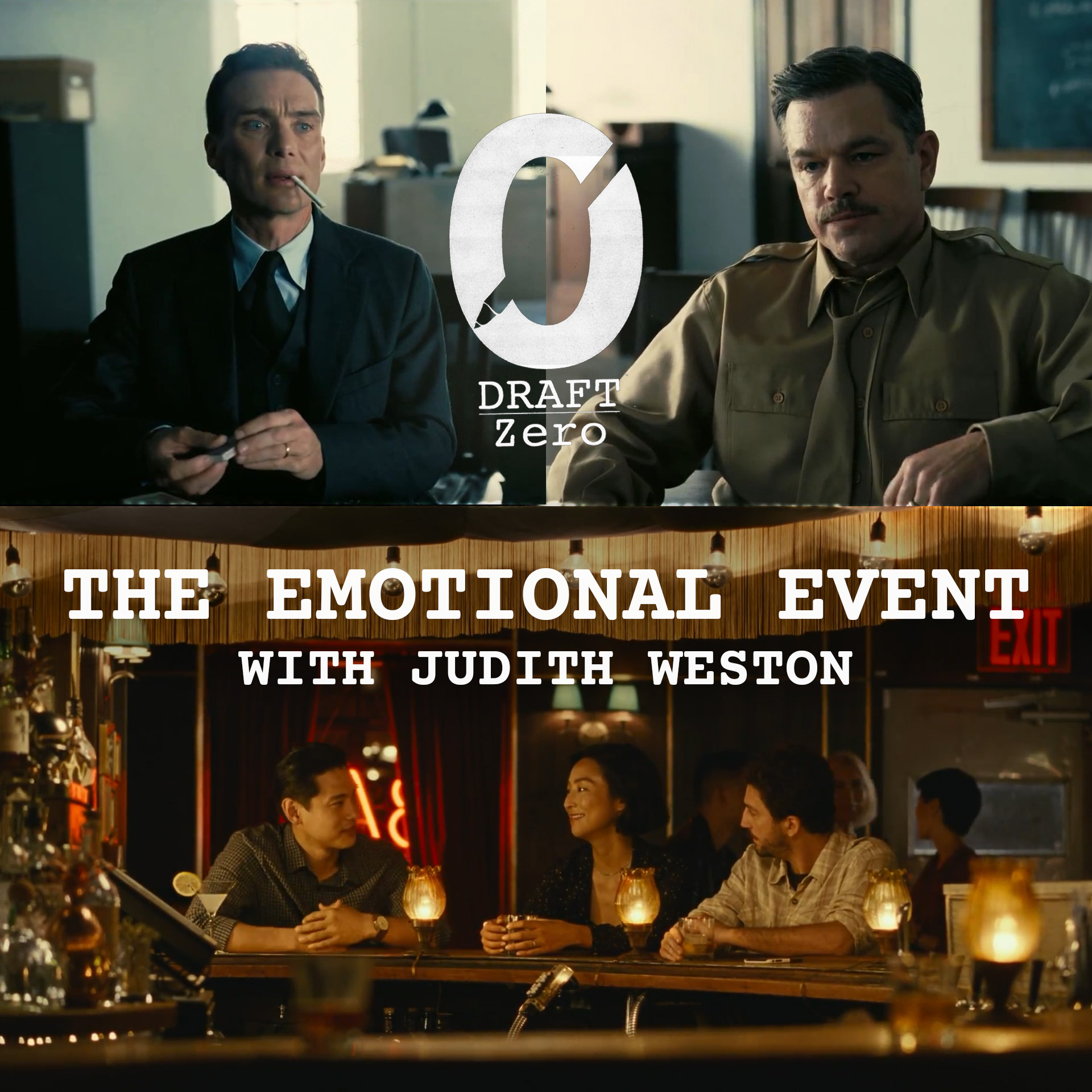
How and why should every scene have an emotional event?
AI✦Understanding what characters actually want entering a scene--not what the plot requires them to do--becomes the writing tool Judith emphasizes for generating authentic emotional events.✦
Listen to understand why a scene's power lives in what shifts between characters, not what happens to them.
▶
More Info
How and why should every scene have an emotional event?…
→
How can you keep your audience hooked when they know the end of the story?
AI✦In biopics where the ending is known, Stu and Chas examine what drives characters forward moment-to-moment, separating the what-happens from the why-it-matters.✦
Listen listen if you're writing a biopic or any story where the audience already knows how it ends.
▶
More Info
Chas, Stu and Mel take a deep dive into stakes, using then lens of biopics to help us think about them. If an audience already knows the “plot” outcome of a story, then how do you create stakes to make a story tense for the audience…
→
How can I develop my plot before writing the screenplay?
AI✦Character documents are identified as part of the pre-screenplay toolkit, meaning motivation work happens within these short-form development pieces.✦
Listen to understand why a treatment isn't something to dread, but the plot-development tool that saves you months of writing.
▶
More Info
Stu and Chas are joined by fan-favourite, Stephen Cleary, to NOT look at what makes great screenplays work -- but what makes great “short documents” work. We draw on Stephen Cleary’s wealth of experience in developing work with writers, as a producer, as a script editor and as a former head of development…
→
Can your characters be given choices and yet still be deprived of agency?
AI✦The episode uses the framework of choice and agency to interrogate whether characters in Blade Runner 2049 are actually motivated toward their decisions or merely executing predetermined outcomes.✦
Listen to discover how characters can be dramatised through binary choices (and understand the difference between choice and agency).
▶
More Info
To kick off 2018, Chas and Stu take a deep dive into one of their favourite movies of 2017: Blade Runner 2049. However, they abstained from “Fox News-ing this shit” by being joined by the most accomplished screenwriter they know, C.S. McMullen (Blood List 2017, Black List 2017, also a lover of Blade Runner 2049)…
→
How can films maintain audience interest without stakes or plot questions?
AI✦Understanding why a character makes the choices they do becomes the organizing principle of these narratives, replacing plot mechanics with psychological and behavioral clarity.✦
Listen if you're writing a character study and unsure how to build momentum without external conflict.
▶
More Info
Continuing their focus on “character”, Stuart and Chas take a close look at films that may be considered character-driven... or rather character studies... or just plot-lite films? Whatever you call them, these films — CHEF, HAPPY-GO-LUCKY, and AMOUR — let their plots take a back seat to a closer examination of their characters. Stuart and Chas dive in to investigate how, without plot driving the story forward, do these films maintain our interest? We talk Mike Leigh’s idea of the ‘Running Condition’, Character Choice, SceneWork and the myriad other techniques the filmmakers use to keep us interested…
→
How does splitting 'character functions' enhance theme?
AI✦Splitting functions reveals how different characters want different things--the protagonist may want one outcome while the active character pursues another, creating richer motivational landscapes than a single character managing both.✦
Listen to see how splitting character functions across your cast sharpens what your story actually means.
▶
More Info
We are often told that our ‘protagonist’ needs to be a active. That they need to be compelling. That they need to change. And - old faithful - that they need to be likeable. But after looking at MAD MAX: FURY ROAD, STAR TREK (2009), THE FIGHTER, and SICARIO, Chas and Stu learn that your primary character does not need to do
all these things. In fact, they learn that splitting these functions between your primary characters can reinforce theme and create potential for different types of narratives…
→
How do you make unlikeable characters compelling to watch... in drama?
AI✦Understanding why asshole protagonists do what they do--their drives beneath the reprehensible surface--is essential to making them narratively compelling rather than just narratively functional.✦
Listen when you're writing a protagonist who does terrible things but you need the audience to keep watching.
▶
More Info
Stu and Chas revisit a topic from a year ago: how do screenwriters make unlikeable characters compelling? This time, we turn our focus to dramas and analyse how AMERICAN HISTORY X, YOUNG ADULT, NIGHTCRAWLER all make their asshole protagonists compelling to watch. We expand our original list of five writer’s tools to include a few more for your tool belt…
→
How can the middle of your film pivot so much that it pulls the rug out of your audience?
AI✦Examining films like Prisoners and Short Term 12 alongside ALIEN reveals how a midpoint shift resets the protagonist’s motivation, forcing them to pursue a new or inverted goal.✦
Listen when your second act sags and you need a structural jolt to accelerate audience engagement.
▶
More Info
Stu and Chas embark on the first of a series of explorations into the dreaded Second Act. Their first stop is midpoint reversals or shifts, a plot point bang in the middle of ACT II that changes the protagonist’s goal, raises the stakes and potentially leaves your audience leaning forward and asking “
How the hell is this going to end?&rdquo…
→
Films:
Death at a Funeral (2007)
,
Prisoners (2013)
,
Short Term 12 (2013)
,
Alien (1979)
,
Aliens (1986)
,
The Bourne Supremacy (2004)
,
Full Metal Jacket (1987)
,
Philomena (2013)
,
How I Live Now (2013)
,
Elysium (2013)
,
Die Hard (1988)
,
Star Wars (1977)
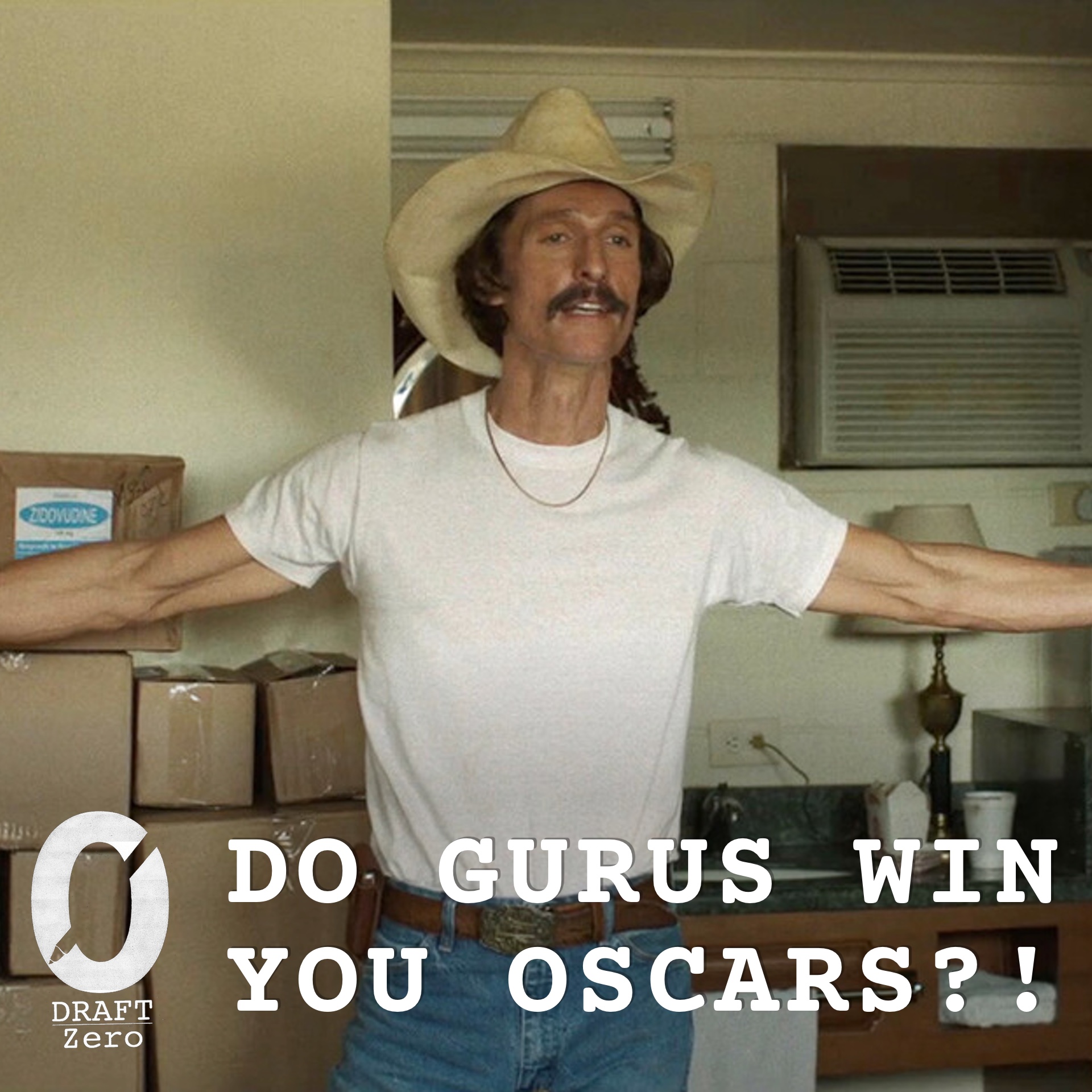
Do Oscar-Nominated screenwriters follow the structural formulas prescribed by the 'gurus' and books?
AI✦Stu and Chas examine Martin’s resistance to helping Philomena as a way to ‘build empathy’ and track how Ron’s self-interest gradually transforms into altruism across repeated cycles.✦
Listen if you want to know whether Blake Snyder, Michael Hauge and Christopher Vogler's structural theories actually apply to Academy Award-nominated screenplays
▶
More Info
Three of the most widely read structure books in screenwriting — Snyder’s
Save the Cat, Vogler’s
The Writer’s Journey, and Michael Hauge’s
Six Stages — all make essentially the same claim: this is how great films are built. In our debut episode, we run that claim against two Oscar-nominated films to see if it holds: PHILOMENA and DALLAS BUYERS CLUB…
→