
§ RESOURCES / TOPICS / Emotional Contract
Emotional Contract
Also known as audience contract. The audience’s expectation of what they will feel — e.g. horror will make them scared, thrillers will make them tense, comedy will make them laugh. Related to genre expectations. Not to be confused with audience empathy.
"... I go, well, that’s what I want you to feel: I want you to feel uncomfortable."
— Chas Fisher | DZ-123: Flawed Characters in Noir
Start here
DZ-87: Keeping Genre Fresh
How do you deliver on the emotional contract of a genre while surprising the audience?
AI✦The entire episode pivots on understanding what audiences expect to feel from a genre and how to honor that contract while still surprising them.✦
Listen when you're writing within a genre but terrified you'll deliver something your audience has already seen.
▶ More Info
In tackling this enormous topic, Stu and Chads enlist professional TV writer and director Kodie Bedford, someone who has somehow managed to defy genre pigeon-holing by writing mystery, comedy and vampire shows… →
DZ-88: Drama in Genre clothing
How can dramas use genre elements to hook their audiences?
AI✦The episode dissects how audiences contract for one emotional experience (tension, suspense, triumph) based on genre signals, then the film delivers a different emotional payload rooted in character.✦
Listen if you're writing a genre film but sense your story wants to become something else entirely.
▶ More Info
Stu and Chas reunite with TV writer & director Kodie Bedford to look at how some films start out as genre but gradually become character dramas. Or, as Stu never said on the episode “Genre in the streets, Drama in the sheets”.… →
KEY IDEAS
Discomfort as Emotional Contract
"... I go, well, that's what I want you to feel: I want you to feel uncomfortable."
— Chas Fisher (00:04:02) · DZ-123: Flawed Characters in Noir
Emotional Recontextualisation
"Every harmless story is the shell of something that I'm then going to pack with gunpowder and give back to you. And you will accept it because you've held it before as a harmless shell. Either building up the strength of the audience, building up the trust of the audience, or building up these reference points for the audience to understand these stories retrospectively."
— Alice Fraser (02:09:17) · DZ-83: A Very Thematic Stand-up Special!
Even More
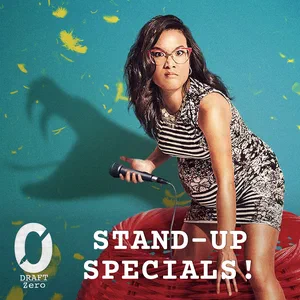
DZ-83: A Very Thematic Stand-up Special!
What can screenwriters learn from the storytelling techniques used by stand-up comedians?
AI✦Alice describes the challenge of ‘balancing out how much I could demand of them and how much I needed to make them feel comfortable again,’ framing the emotional pact between performer and audience as something that must be actively managed throughout.✦
Listen if you want to understand how stand-up comedians grip audiences and build emotional arcs (and what narrative tools screenwriters can borrow from comedy)!
▶ More Info
Standup comedians can keep audiences gripped to their every word for over an hour, and often bring them to emotional climaxes by the end. So how do they do it and what tools can apply to scripted narratives… →
DZ-70: Joker & Melodrama
How does Joker use melodramatic techniques to elevate its storytelling?
AI✦The hosts analyze how Joker establishes and fulfills (or ruptures) the emotional pact it makes with the audience through melodramatic storytelling--what it promises to deliver and what it actually gives.✦
Listen if you're writing a character whose trauma becomes the engine of your entire narrative.
▶ More Info
Draft Zero return with their next YouTube livestream! Stu and Chas take a deep dive into JOKER and analyse the film through the story paradigm of melodrama. Is it a melodrama? Why or why not does that matter? And does that influence how it has been written on the page… →
Films:
Joker (2019)
DZ-59: Avengers Endgame - Ending Character Journeys
Do you want your audience feeling with or for your characters?
AI✦The debate over Tony and Cap’s arcs is fundamentally about what the film promised its audience emotionally and whether it paid that promise off by the finale.✦
Listen if you're interested in how to dramatise character change, position your audience in relation to characters, and explore the difference between empathy and sympathy in screenwriting
▶ More Info
One day, Chas saw Avengers: Endgame for the second time and wrote a review on Letterboxd. In particular, he had issues with how little he perceived the characters of Cap and Tony changed within the film, their big finale (spoiler). Then friend and patron of the podcast Julio Olivera vehemently disagreed in the comments. He was egged on by Stu. And there in the comments began a debate that looked a lot like an episode of Draft Zero. So we decided to make it one… →
Films:
Avengers: Endgame (2019)
DZ-25: Coincidences, Contrivances & Giant Eagles
How do screenwriters get away with using coincidences in their stories?
AI✦When a writer needs coincidence to move the plot forward, they’re testing whether they’ve built enough trust with the audience to honor an implicit agreement about what kind of story this is.✦
Listen when you need to know which coincidences earn trust and which ones feel like cheating.
▶ More Info
Remember that time in THE DARK KNIGHT RETURNS when Bruce suddenly - magically - returned to Gotham, and you were like “WTF?!” Well, it turns out that many of the best films have moments that are just as coincidental or contrived (or a flock of Giant Eagles) and yet get away with it. Does Pixar’s “rule” that it is ‘cheating to use coincidences to get your characters out of trouble’, always apply… →
DZ-22: Romantic Comedy, Actually
How can studying RomCom clichés teach us to subvert them?
AI✦The episode unpacks what audiences expect from a romcom and how meeting--or deliberately violating--that contract determines whether a script lands or falls flat.✦
Listen if you're writing a romcom and want to understand what makes this gentre tick.
▶ More Info
With Stu busy working on Hollywood blockbusters, Chas is joined by Alli Parker (script department on Aussie TV series and former co-ordinator of European #scriptchat) to unpick successful romcoms to see if they can illuminate a path for writers working in this struggling genre. Cheap to produce and potentially highly lucrative, Chas and Alli look at RomCom’s conventions to see what it may take to reinvigorate this genre… →
Films:
When Harry Met Sally... (1989)
, (500) Days of Summer (2009)
, The Proposal (2009)
, Notting Hill (1999)
DZ-123: Flawed Characters in Noir
What can Film Noir teach us about character arcs and audience engagement?
AI✦The hosts discuss how noir sets an implicit bargain with the audience to experience tension and moral ambiguity rather than endorsement, establishing a tonal expectation that allows them to make viewers complicit without corrupting them.✦
Listen if you want to write morally compromised characters without endorsing their choices.
▶ More Info
In this two part series, Mel and Chas use Noir (the genre) as a lens to interrogate flawed characters. How can characters doing reprehensible things still engage audiences? How can you ensure representation isn’t endorsement? And whether these characters undergo transformative arcs, or simply reveal their true natures… →

DZ-114: Climaxes in CHALLENGERS
How does ending your story on the climax affect audience experience?
AI✦By analyzing what CHALLENGERS withholds from the audience at its ending, the hosts examine how filmmakers can break or reframe the implicit agreement they’ve made with viewers about resolution and catharsis.✦
Listen to understand how withholding resolution can make your story great!
▶ More Info
While Stu is on show, Mel and Chas sit down to analyse the meaning behind the ending of 2024’s CHALLENGERS, especially when - upon reading the script - the most impactful moment of the ending on screen (for Chas in particular) is not written on the page… →
Films:
Challengers (2024)
DZ-53: Antagonists! 5 - vs Audience
What if there is no antagonist?
AI✦Forrest Gump demonstrates how a film can position itself as antagonist by breaking the emotional contract with its audience through tonal shifts and narrative meandering.✦
Listen to turn narrative uncertainty itself into the engine that keeps viewers compelled.
▶ More Info
It’s time. The Epic Deep Dive(TM) into Antagonists has reached its shuddering conclusion. And for this Part V - by choosing films that have no obvious singular antagonist (and in some cases no obvious narrative either) - Stu and Chas realised there was indeed a final category of antagonists: the films themselves. Where the film (and the filmmaker) are engaging directly with the audience. Where the films are... VERSUS AUDIENCE… →
Films:
Ocean's Eight (2018)
, The Second (2018)
, F for Fake (1973)
, Sans Soleil (1983)
, Forrest Gump (1994)
DZ-84: Choices & Decisions 1 - Booksmart
What is the difference between choice and decision when it comes to characters?
AI✦When you separate what the audience knows about a character’s choices, decisions, and consequences, you’re either honoring or breaking the emotional contract that determines whether they’ll feel invested in what happens next.✦
Listen how the separation of choice, decision, and consequence (for a character) creates emotional impact.
▶ More Info
In order to better understand dramatising of character, Chas and Stu take a very draft zero look at very specific tool: choices and decisions. We analyse three films through the decisions made by their characters. In particular, how the audience understanding of: the choice available, the considered decision itself, and the consequence changes how we feel about these characters. And how separating those three things can create different emotional effects on your audience… →
Films:
Booksmart (2019)
, Se7en (1995)
, Star Wars (1977)
, The Farewell (2019)
, Wrath of Man (2021)
, Fleabag (2016)
Shows:
Fleabag
DZ-27: Competing views on Screenplay Competitions
Can screenplay competitions be worth it?
AI✦Chas and Stu interrogate what screenplay competitions are really selling--whether they’re feeding ’the hope machine’ or delivering genuine value on the emotional investment writers make by entering.✦
Listen if you're considering entering a screenplay competition and want to hear from writers and industry professionals about whether it's a worthwhile investment!
▶ More Info
After being repeatedly asked by listeners for thoughts on screenplay competitions, Stu and Chas go full back matter for this special episode. They tackle the question - do comps just feeding the hope machine or are they a valid investment? - in their typical detailed (i.e. long) style. With their differing perspectives, Stu (a director looking for material) and Chas (a writer keen for exposure), talk to an impressive roster of guests. We start with Gordy Hoffman, founder and judge of the Bluecat Screenplay Competition; repeat Austin Film Festival attendees - first for the screenplay and now for the finished web series of EX BEST - Diana Gettinger & Monica Hewes; Launchpad 2014 finalist Tony Pitman; and Insite Competition winner Blake Ashford, whose winning script CUT SNAKE hit cinemas in 2015... ten years after winning the competition… →