DRAFT ZERO
§ RESOURCES / TOPICS / Big Print

Big Print

Every episode covering Big Print.


"I do think in comedy, it’s especially challenging to get readers to read the big print. You know, so much of the humour comes from the dialogue, and comedy is such a dialogue. Often, certainly contemporary comedy is so dialogue-driven."

— Chas Fisher  |  DZ-116: Writing Physical Comedy


KEY IDEAS

Action Lines as Musical Score

"Your action lines have to play the role of the musical score and that's exactly what he does here when he says the monster that killed her family that's the text version of the music, that the score turns up in that moment in the movie."

— Tom Vaughn (00:48:51) · DZ-120: Subtext is Overrated!

Dialogue Over Big Print

"Having characters talking about what's happening is the funnier option than doing it in big print."

— Chas Fisher (01:05:06) · DZ-116: Writing Physical Comedy

Dialogue-Driven Comedy and the Big Print Challenge

"I do think in comedy, it's especially challenging to get readers to read the big print. You know, so much of the humour comes from the dialogue, and comedy is such a dialogue. Often, certainly contemporary comedy is so dialogue-driven."

— Chas Fisher (00:11:43) · DZ-116: Writing Physical Comedy


DZ-117: Pulling Off Tonal Shifts

How can we teach our audience new storytelling rules in the middle of our story?
AIChas and Mel repeatedly examine how action line description--’the big print’--signals tone and prepares audiences for shifts, particularly noting Swiss Army Man uses it ’to greater lengths to tell us how to feel as an audience.'
⏱ 2h 8m
31 MAR 2025
Listen if you want to write tonal pivots that land on the page without a director's toolkit.
More Info
Following on from our episodes on establishing tone through action lines and through character, this is what we have been building up to: how to pull off a tonal switch… that does NOT throw the audience out of the film. And, in particular, how to pull that off on the page when writers don’t have framing, lighting, music, editing, etc. at our disposal…


DZ-116: Writing Physical Comedy

How do you make extended technical scenes funny on the page?
AIMel and Chas detail how judicious use of ALL CAPS, ellipses, and m-dashes in action lines recreate visual gags on the page, and when to let a paragraph go long to draw attention to itself--a technique all three scripts deploy differently.
⏱ 1h 35m
26 FEB 2025
Listen to learn how formatting--white space, caps, dashes--becomes your comedy toolkit without a director.
More Info
Mel joins Chas to tackle physical comedy. We limited our homework selection to extended scenes (as opposed to moments and sight gags) in live action projects and – with the help of our Patreons – selected early sequences from BRINGING UP BABY, the pilot for HAPPY ENDINGS and that wonderful food poisoning scene in BRIDESMAIDS…


DZ-101: Oners - Creating Immediacy & Anchoring Action on the Page

What can we learn by analysing how 'oners' are written on the page?
AIMel’s performance of action lines demonstrates how the typography and word choice of big print itself does the work of choreographing a continuous take.
⏱ 1h 23m
3 JUL 2023
Listen to understand how screenwriters direct the camera without calling shots.
More Info
Chas, Stu and Mel reunite to talk about writing the feel of camerawork in screenplays. We use “oners” — a long-playing continuous take — as a lens to talk about how some writers have “directed” from the page. We talk immediacy, camera positions, handovers, and anchoring action and more…


DZ-120: Subtext is Overrated!

How do character goals, tactics, and fears create subtext automatically?
AIStu highlights how action lines and formatting--‘giant white text against a black block’--function as the screenwriter’s tools to direct actor interpretation and audience experience when dialogue can’t.
⏱ 1h 54m
1 AUG 2025
Listen if you're struggling to write subtext without it feeling forced!
More Info
Or, how focusing on good drama will result in good subtext. We often hear how subtext is important for good screenwriting. We’re here to tell you it isn’t. Good subtext is a result of good drama, and your focus should be on creating that good drama. But how…


DZ-108: The Emotional Event with Judith Weston

How and why should every scene have an emotional event?
AIJudith calls stage directions “big print” and discusses how the physical descriptions in the Casino Royale shower scene--the specific choreography of bodies--initially carried the emotional event before being cut down to dialogue and subtext.
⏱ 1h 37m
31 MAR 2024
Listen to understand why a scene's power lives in what shifts between characters, not what happens to them.
More Info

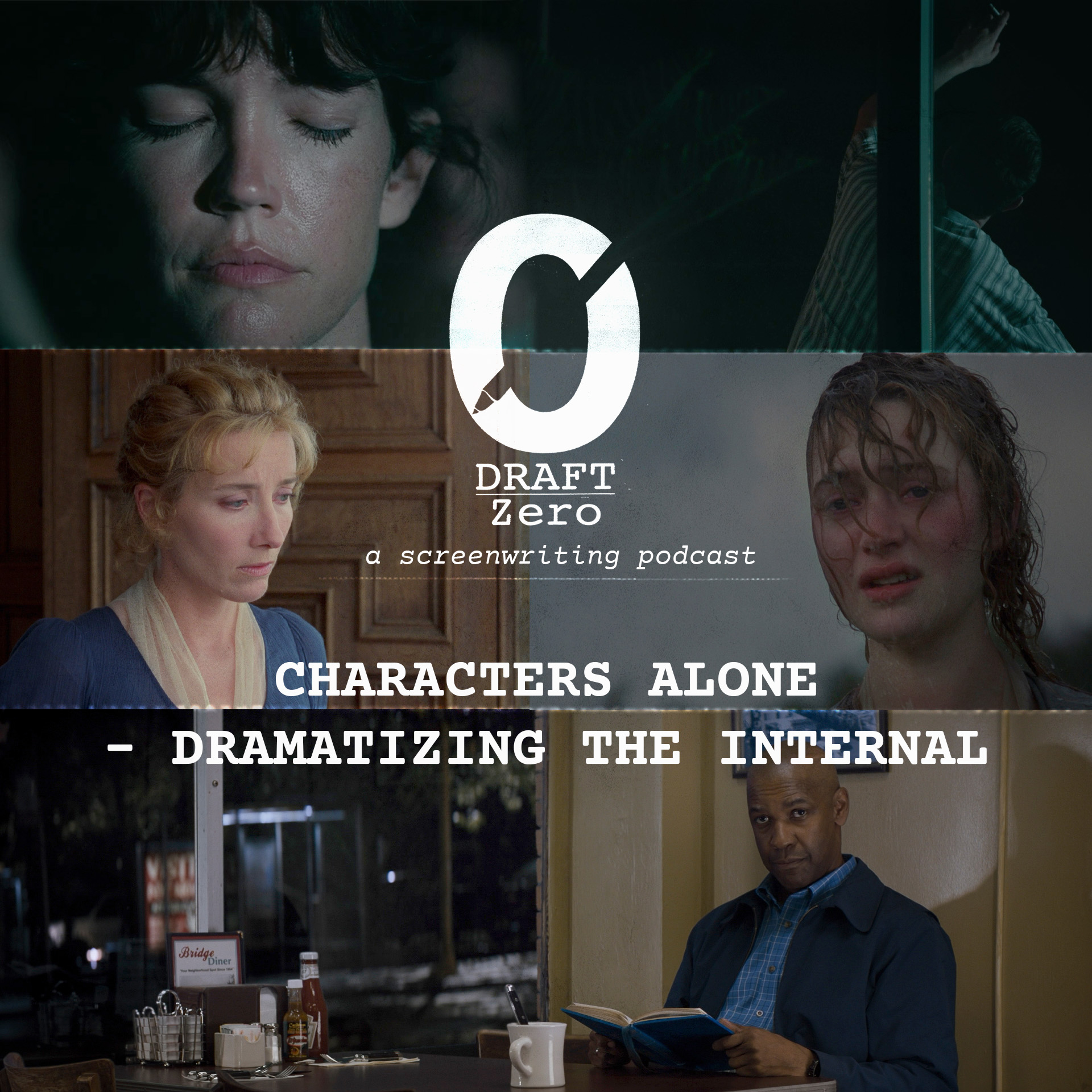
DZ-104: Characters Alone - Dramatizing the Internal

How can scenes where characters are alone increase our connection with them?
AIThe episode discusses how big print--the visual and behavioral choices characters make when alone--can reflect their emotional truth without dialogue.
⏱ 1h 29m
1 NOV 2023
Listen to understand how solitude reveals character interiority and deepens audience connection
More Info
In this episode, we explore the audience’s connection with characters through the lens of characters being alone…


DZ-62: Unfilmables 3 - As Ifs & Emotional Context

How do you know if your unfilmable is good... or if you're just being a wanker?
AIThe episode features Carissa Lee performing big print readings, making the distinction between what lands on the page versus what lands in performance a tangible, audible reference point.
⏱ 2h 17m
2 DEC 2019
Listen if you want to learn how to write tone and emotional context on the page.
More Info
In this third and final part of our series on unfilmables, Chas and Stu turn their critical eye to... each other’s work! They take their key learnings from the previous episodes and apply them to rewriting scenes from their own projects. They discuss metaphors, emotional context, and how you can write tone on the page without resorting to unfilmables…


DZ-60: Unfilmables 1 - Engaging imagination

How can unfilmables enhance the experience of your script?
AIBy analyzing how screenplays successfully employ descriptions and stage directions that live on the page, the episode engages with big print as a reader experience distinct from what’s producible on screen.
⏱ 2h 25m
7 AUG 2019
Listen to discover how *produced* screenplays use unfilmables to shape tone, performance, and humour on the page.
More Info

DZ-86: Backmatter - Minimum Viable Product

How do you determine what is your MVP?
AIThe MVP and minimum loveable thing framework forces you to identify what’s actually essential to your story--the non-negotiable core that defines your project.
⏱ 1h 29m
1 FEB 2022
Listen for screenwriting lessons from 2021, strategies for pitching projects, and insights on running a writers workshop
More Info
In their annual full backwater episode, Stu and Chas let out their pandemic hair, drop the ruse of objectivity, and allow themselves to have even more options about writing and the business of writing…