Truth and Power
"When a character says something that's actually true, they lose power. [...] When these characters are saying things, they're not revealing a secret per se -- what they're doing is actually acknowledging that they're aware of it. And by doing that, every time that they do that, they relinquish power."
— Chas Fisher
(01:09:19)
· DZ-127: Secrets and Clues 2 - The Cost of Revelation
Dramatic Irony Reignites Subtext
"Because she is completely incidental to what's going on in terms of the tactics of the people in the scene. Like Shoshana's tactic is, I need to say as little as humanly possible. And the other two are the ones with an objective. And it's only when Hans arrives in the scene that the subtext is reignited and it's just reignited pretty much through dramatic irony, through narrative point of view."
— Chas Fisher
(00:55:42)
· DZ-120: Subtext is Overrated!
Subtext: The Meaning Beneath the Text
"Subtext is whatever text is going on beneath the text, so what we mean by text? We're talking about film and TV, what are the characters literally doing and saying, and is there any other meaning underneath that, beyond the literal, beyond what they're doing and saying?"
— Chas Fisher
(00:03:57)
· DZ-120: Subtext is Overrated!
How and why should every scene have an emotional event?
AI✦The episode’s breakdown of each scene hinges on what characters aren’t saying directly, with Judith emphasizing how subtext emerges from the unspoken dynamics between people in a room.✦
Listen to understand why a scene's power lives in what shifts between characters, not what happens to them.
▶
More Info
How and why should every scene have an emotional event?…
→

How can you use physical objects to track character change… wordlessly?
AI✦Talismans communicate emotional and thematic information without dialogue--the relationship a character has with an object says what they cannot or will not speak aloud.✦
Listen to write objects that accumulate powerful meanings across your story and create unspoken emotional payoffs.
▶
More Info
In part two of our two-part series on TALISMANS, we break down the beats used to turn objects (in a broad sense) into talismans; how talismans can track character journeys and transitions; and how they can be used to create powerful moments without words…
→
How can you let your characters tell us how they feel?
AI✦What characters choose not to say--the gap between what the audience knows and what gets verbalized--drives the fascination and subversion of these encounters.✦
Listen to understand why what a character *doesn't* say reveals more than exposition ever could.
▶
More Info
In watching Season 7 (and the first three episodes of Season 8) of Game of Thrones, Stu noticed that there were lots of scenes where characters either met for the first time or were reunited after a long time apart. In these scenes, the audience knows (or thinks they know) more than either character. And so the fascination, power and subversion comes from what the characters choose to reveal... or not…
→
How does dialogue serve to reveal character?
AI✦The discussion covers what characters are really saying beneath their words, using audio excerpts to clarify how subtext operates when you hear dialogue performed aloud.✦
Listen if your want your dialogue to individualizes characters, reveal characterization, and shift status!
▶
More Info
Chas & Stu are joined once again by the renowned script developer and producer, Stephen Cleary. In the first part of our series on writing better dialogue (there will be more!), we take a close look at how dialogue serves character: individuating characters, revealing characterisation, shifting status, and much more…
→
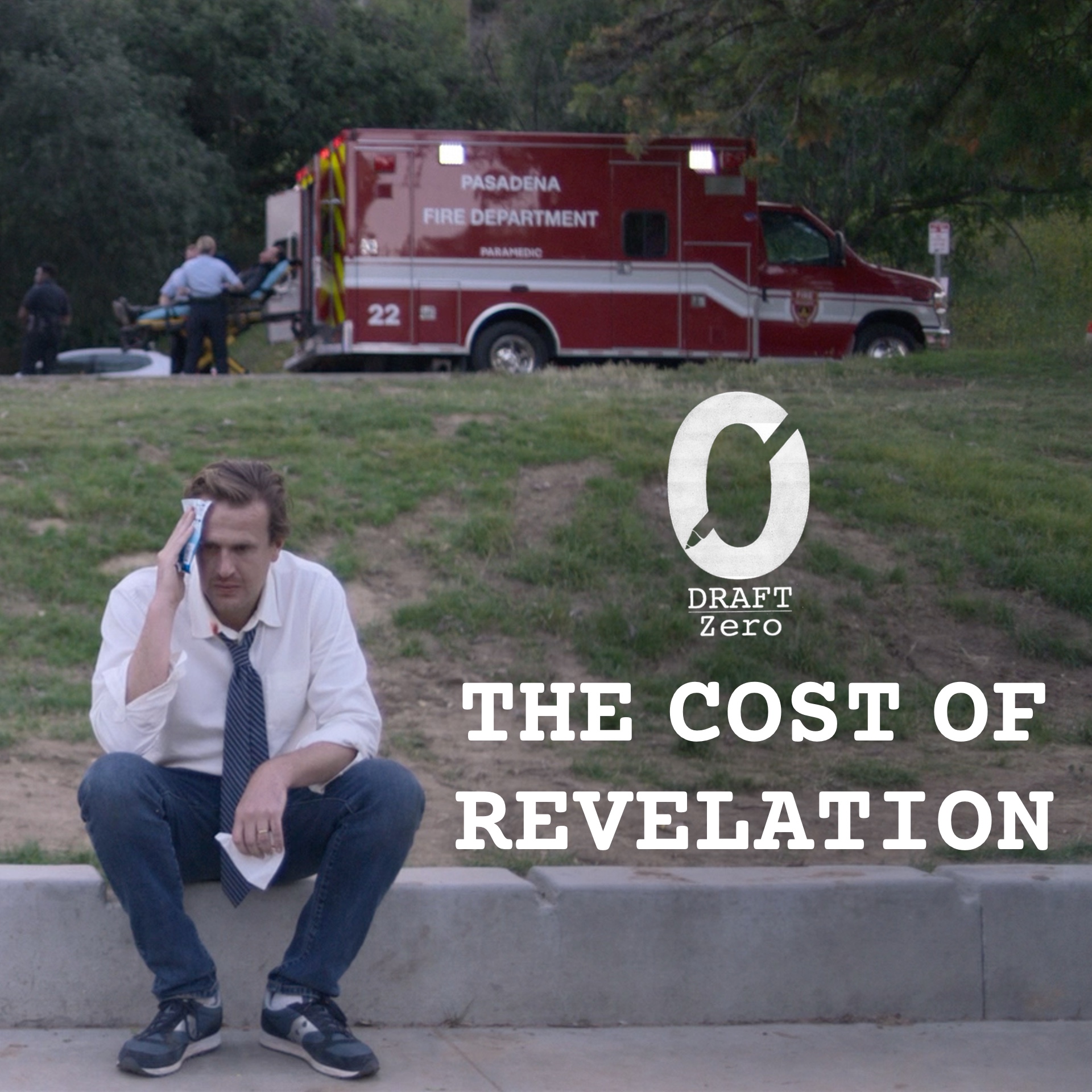
What does it cost a character to find something out, or to say it?
AI✦Chas identifies that in SHRINKING the characters already possess all the information they need, making the drama operate through what remains unsaid between them rather than what the audience doesn’t know--power comes not from learning but from characters choosing to reveal truth.✦
Listen to learn the emotional impact of revealing secrets vs discovering them.
▶
More Info
In this episode Stu, Chas and Mel apply the Landmark–Hidden–Secret framework (from DZ-126) across two very different genres: the thriller SIDE EFFECTS (2013) and the tragicomic pilot of SHRINKING…
→
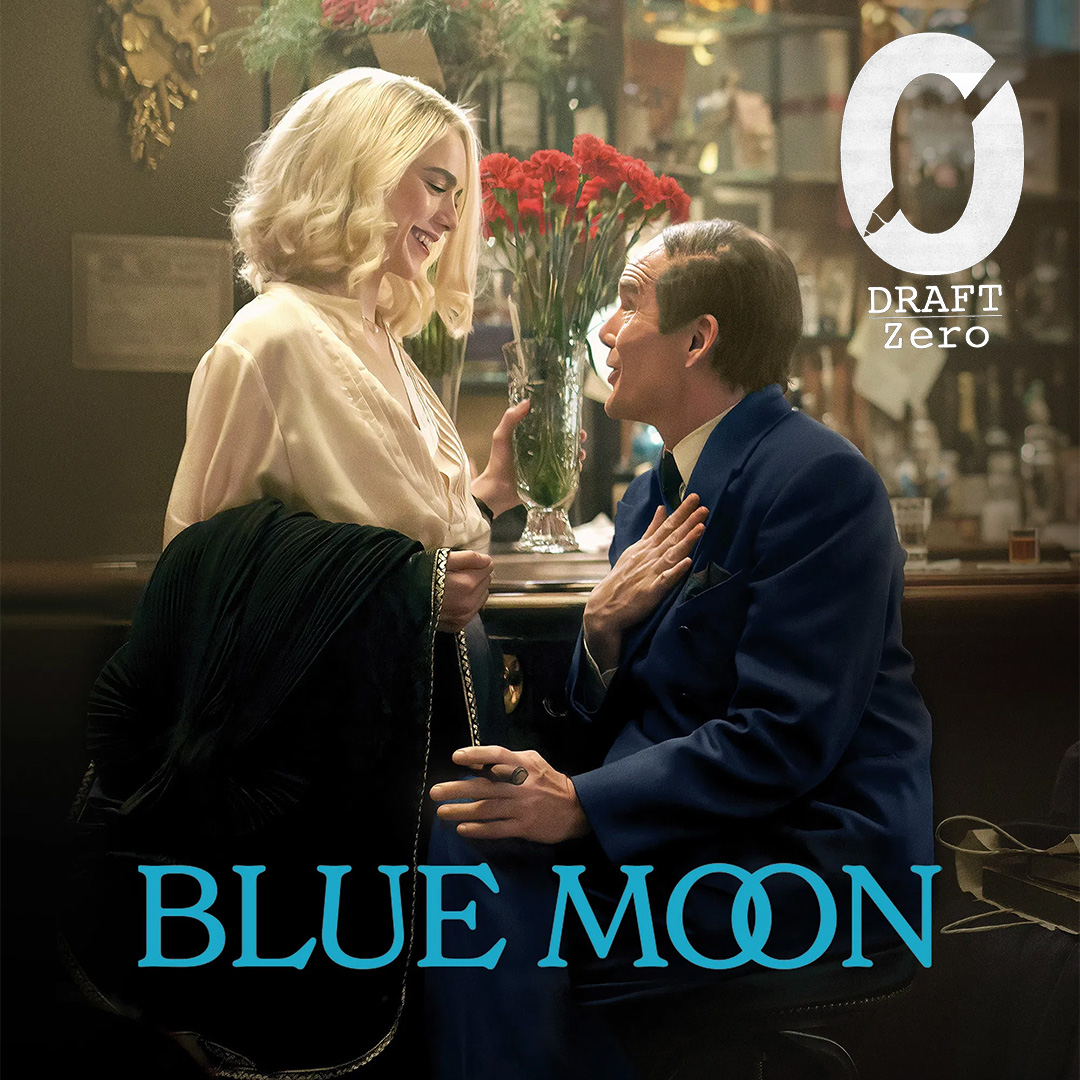
What craft tools make a low-budget, contained, period drama riveting?
AI✦Mel identifies how the bathroom story about a woman is actually about a man, and Hart lands on jokes rather than admitting the truth outright, showing how the script engineers concealment through humor and historical context.✦
Listen if you want to understand how narrative POV, screenplay format, and dialogue craft can elevate a contained biopic into an Oscar-nominated film
▶
More Info
BLUE MOON is a talky, period-drama that film about an obscure songer-writer in the 1940s. Yet, it attracted world-class talent AND Academy Award nominations, including for it’s script. Join Chas & Mel as they explore how narrative POV, interweaving relationships, hooky dialogue, and even the screenplay format itself make the script for BLUE MOON so great…
→
What scene-writing tools can be learned from martial arts?
AI✦In a sword fight, what’s unspoken--the distance you maintain, the vulnerability you expose--carries as much weight as the actual strike, and Damon shows how the same principle applies when characters approach conflict without stating their true intentions.✦
Listen if you want to know why the distance between two characters matters more than what they say.
▶
More Info
In this slightly unusual episode of Draft Zero (but also incredibly on brand), Stu and philosopher-swordsperson Damon Young discuss how the lessons they have learned from martial arts can be applied to scenes. In particular, they discuss how approaching an opponent in a sword fight can be analogous to how characters approach conflict, such as: the distance between the characters, who chooses to engage first, how to feint, how to lure an attack by leaving yourself vulnerable, etc…
→
What is difference between choice and decision when it comes to audience experience?
AI✦THE FAREWELL’s layered use of the lie-as-choice reveals how concealment operates at every scene level, making decision-making a mechanism for generating dramatic subtext.✦
Listen when you want to show a character refusing to change despite every opportunity to do so.
▶
More Info
In our second part of our “series” on Choices & Decisions, we take a deep dive into THE FAREWELL and WRATH OF MAN, with a sidebar on NOMADLAND…
→
How can you create flow and contrast in your dialogue?
AI✦Stephen’s research into genderlect and the hosts’ focus on the ‘hook and eye’ in dialogue reveals how characters conceal their true intentions beneath what they say.✦
Listen when you're rewriting dialogue and want to create connection between characters.
▶
More Info
A full three years after the first instalment (and one of our most popular), Stu and Chas have kidnapped Stephen Cleary to once again develop some craft tools around dialogue. It would be fair to say that - in that time - all three have learnt a lot more about dialogue than they knew in 2016. It would be also fair to say that Stephen perhaps learnt a little more through his research into “genderlect”…
→
Workshopping ways to fix character motivations.
AI✦Unmotivated decisions often signal missing subtext--what the character actually wants but isn’t saying--and fixing these beats means surfacing the hidden desires driving behavior.✦
Listen if you want to understand how character decisions can break a screenplay and how to fix them
▶
More Info
In this second part of their exploration of character motivations, Chas and Stu dive into what makes “BAD” screenplays NOT work. They examine at moments where they (and maybe you, dear listeners) did not believe a key decision being made by a character and so were taken out of the movie. In a departure from the Draft Zero format, they apply the tools they developed in Part 1 to workshop potential fixes to these beats…
→
How can you dramatise your theme on a scene level?
AI✦The episode demonstrates how thematic questions operate beneath the surface of individual scenes, connecting character motivation to larger story concerns.✦
Listen to discover how a character's worldview becomes the engine of conflict inside a single scene.
▶
More Info
As part of their ongoing exploration of scene-work, Stu and Chas apply their earlier thinking on theme and character worldview to individual scenes. Can examining a scene from a thematic perspective impact the drama, conflict or stakes of the scene? How does your character’s conscious and subconscious world views dramatise the overall theme of the work? How can an individual scene reflect the larger themes of the overall story? Do any of these questions or approaches lead to writing better scenes…
→
How do tactics make your characters and scenes more dynamic?
AI✦The gap between what a character wants and how they try to get it creates the subtext of a scene--the unspoken layer where character essence lives.✦
Listen to learn how a character's tactics reveal who they are under pressure--and how their changing tactics reveals their growth.
▶
More Info
In this episode, Stu and Chas turn their gaze to the “tactics” that characters use in scenes to get what they want. Tactics are
how the characters try to achieve their goals and (we reckon) can be revealing of the essence of their character. The shifting and thwarting of tactics can make scenes more dynamic; while over the course of a story, the changing of tactics can reflect the growth of characters... even if their goal stays the same…
→
How can we make our screenwriting more appealing to Actors?
AI✦The analysis of August: Osage County scenes reveals how actors read between the lines and find meaning in what’s unsaid, making subtext a key consideration for writers courting performers.✦
Listen to understand how writers can craft more compelling material for actors (and how they approach scripts)
▶
More Info
In this episode, Chas and Stu are joined by a very special guest, SARAH SNOOK - star of Succession, Predestination, Jessabelle, and Oddball, amongst many others - to discuss ACTING and it’s relationship with WRITING…
→
What is it about Tarantino's *writing* that elevates his work?
AI✦Tarantino’s scripts work because characters rarely say what they mean, and the gap between surface and intention is where his dramatic irony lives.✦
Listen to steal Tarantino's technique for planting details that detonate as payoffs three scenes later.
▶
More Info
Chapter 1: Of Milk and Men…
→
How does a shift in status or power reveal character?
AI✦What a character actually wants beneath the surface of dialogue becomes visible through their status maneuvering, turning power dynamics into a window onto hidden motivations.✦
Listen to make your character relatinships more dynamic.
▶
More Info
Stu and Chas explore an idea they both came across studying theatre: status and by extension (or juxtaposition) power. Is a story where a character changes status or experiences loss (or gains) in power more compelling…
→
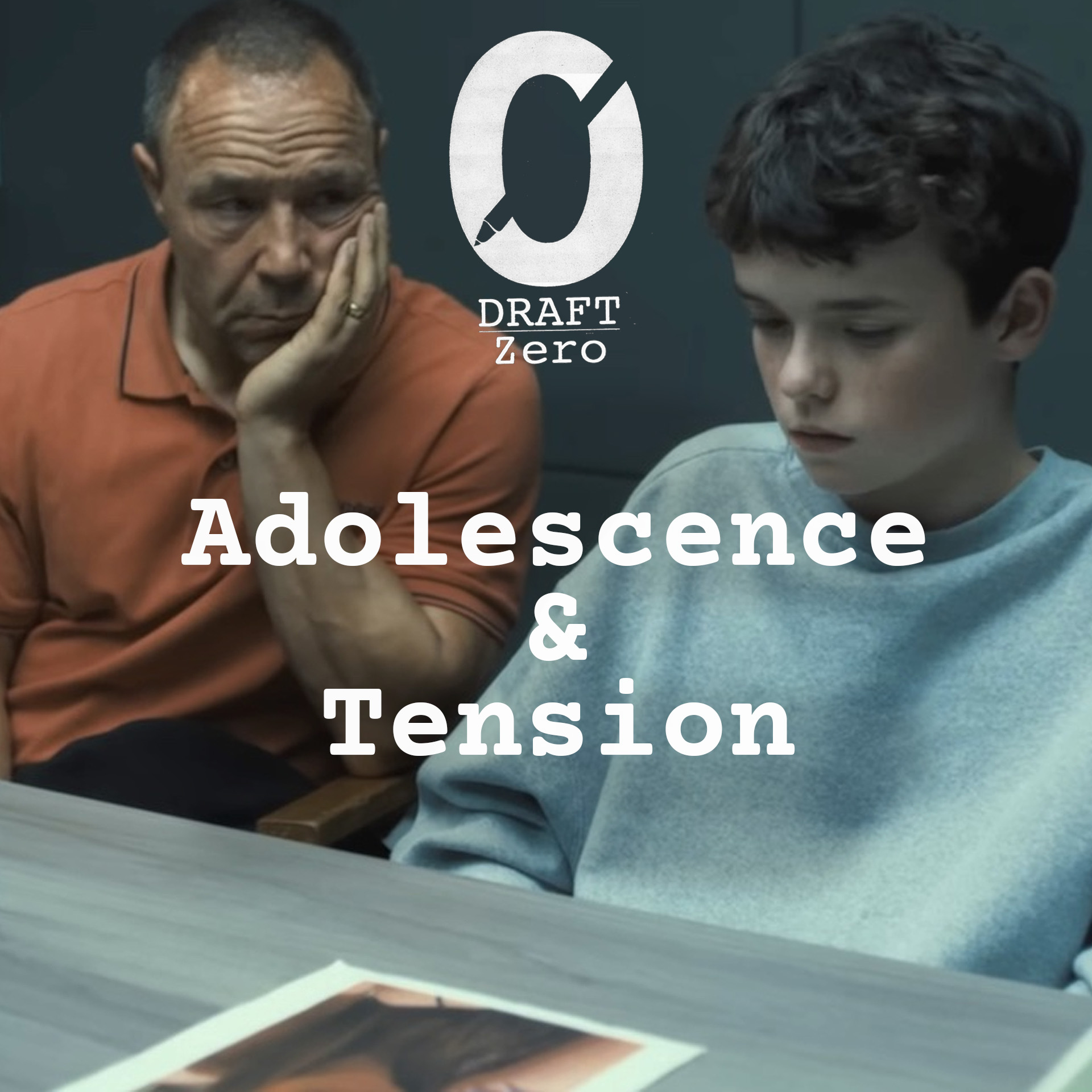
How do dramatic questions create tension?
AI✦Chas identifies how the forensic psychologist’s stillness and emotional restraint during Jamie’s outbursts creates subtext: her refusal to reveal fear or reaction while he towers over her seated form communicates her professionalism and composure without a word of dialogue.✦
Listen when you need tension without external stakes--subtext, stillness, and thematic weight do the work.
▶
More Info
In this episode, Stu and Chas delve into the cultural phenomenon of ADOLESCENCE. We try to find the craft tools that have made the show so compelling and such a catalyst for conversation…
→