How do you dramatise a protagonist's internal journey through their final decision?
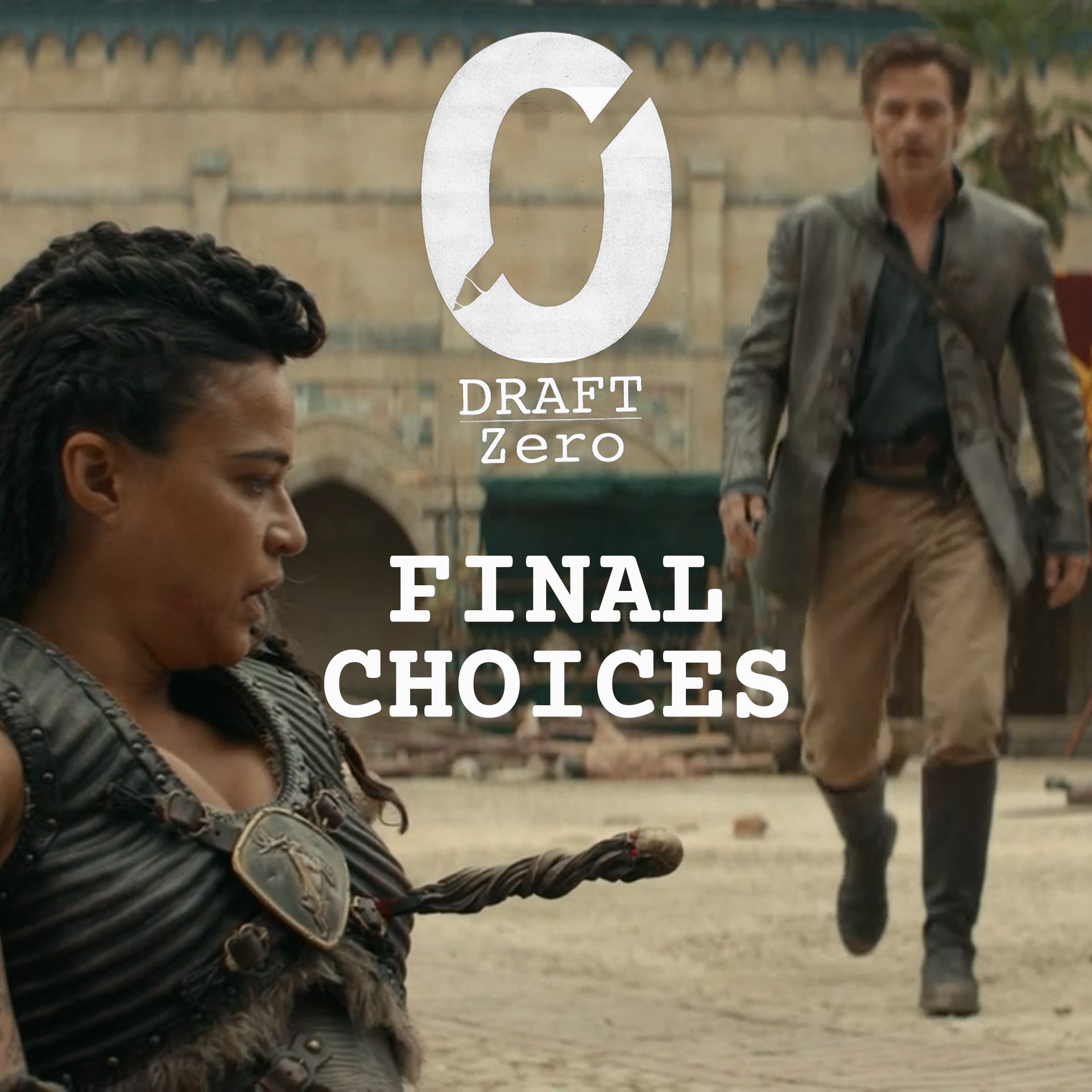
AI✦Stu identifies that a character’s final decision becomes crisis because each alternative poses a loss as well as a gain--in Dungeons & Dragons, resurrecting the wife means losing Holger, forcing the character to weigh what really matters most.✦
Listen if you want to understand how to better dramatise a character's internal journey
▶
More Info
In this episode, Stu and Chas focus
solely on the final choices made by protagonists and how that reflects their character journey and successfully, or not, dramatises the internal…
→

How does interweaving two timelines change how the audience feel?
AI✦The team tackles how to manage stakes when the audience already knows a character’s future, making this a core structural problem in timeline-based narratives.✦
Listen when you're writting multiple timelines and struggling to anchor your reader to one timeline's perspective.
▶
More Info
Stu and Chas are joined by Mel Killingsworth to dissect interweaving timelines. Not anthology films. Not Cloud Atlas. But films where two plot lines featuring the same characters, but from different timelines, are woven together…
→
What changes in your story if your antagonistic forces can't be bargained with?
AI✦Stu’s distinction between obstacles and pressure clarifies how nature antagonists function: they don’t block progress so much as they create escalating pressure that raises the cost of every decision the protagonist makes.✦
Listen to understand why pressure--not obstacles--is what transforms a protagonist when they face an unstoppable force.
▶
More Info
In this Part Three of our Five Part Epic Exploration™ into antagonistic forces (and sources of conflict), Chas & Stu explore “nature” antagonists, including some supernatural ones. What became clear in doing the homework (and recording this episode
twice) was that the antagonistic forces - whether natural or supernatural - presented different narrative challenges to the protagonists if (a) they did not seem to make choices and (b) could not be bargained with or defeated…
→
How can films maintain audience interest without stakes or plot questions?
AI✦The episode’s central question directly addresses how films maintain tension without plot questions or conventional stakes, forcing a reconsideration of what actually constitutes stakes in character-driven work.✦
Listen if you're writing a character study and unsure how to build momentum without external conflict.
▶
More Info
Continuing their focus on “character”, Stuart and Chas take a close look at films that may be considered character-driven... or rather character studies... or just plot-lite films? Whatever you call them, these films — CHEF, HAPPY-GO-LUCKY, and AMOUR — let their plots take a back seat to a closer examination of their characters. Stuart and Chas dive in to investigate how, without plot driving the story forward, do these films maintain our interest? We talk Mike Leigh’s idea of the ‘Running Condition’, Character Choice, SceneWork and the myriad other techniques the filmmakers use to keep us interested…
→
Are your story rules in your pilot strong enough to play out over the life of your show?
AI✦The final acts of these pilots are built on clarifying what’s at stake for the protagonist and the world they inhabit--whether personal, professional, or moral--and those stakes define everything that follows.✦
Listen if you wanna know great television pilots establish the dramatic, literary, and cinematic rules that sustain their entire run.
▶
More Info
Stu and Chas move away from the world of features and dive into the Pilot Episodes of some (New) Golden Age Television: THE SHIELD, THE WIRE, BREAKING BAD, and MAD MEN. And we sneak in some discussion about ANGEL, THE SOPRANOS and GAME OF THRONES…
→
How can the middle of your film pivot so much that it pulls the rug out of your audience?
AI✦A core function of the midpoint shift they examine is raising stakes--forcing the audience to ask ‘How the hell is this going to end?’ by fundamentally altering what the protagonist must achieve.✦
Listen when your second act sags and you need a structural jolt to accelerate audience engagement.
▶
More Info
Stu and Chas embark on the first of a series of explorations into the dreaded Second Act. Their first stop is midpoint reversals or shifts, a plot point bang in the middle of ACT II that changes the protagonist’s goal, raises the stakes and potentially leaves your audience leaning forward and asking “
How the hell is this going to end?&rdquo…
→
Films:
Death at a Funeral (2007)
,
Prisoners (2013)
,
Short Term 12 (2013)
,
Alien (1979)
,
Aliens (1986)
,
The Bourne Supremacy (2004)
,
Full Metal Jacket (1987)
,
Philomena (2013)
,
How I Live Now (2013)
,
Elysium (2013)
,
Die Hard (1988)
,
Star Wars (1977)
How can Secrets and Clues motivate characters?
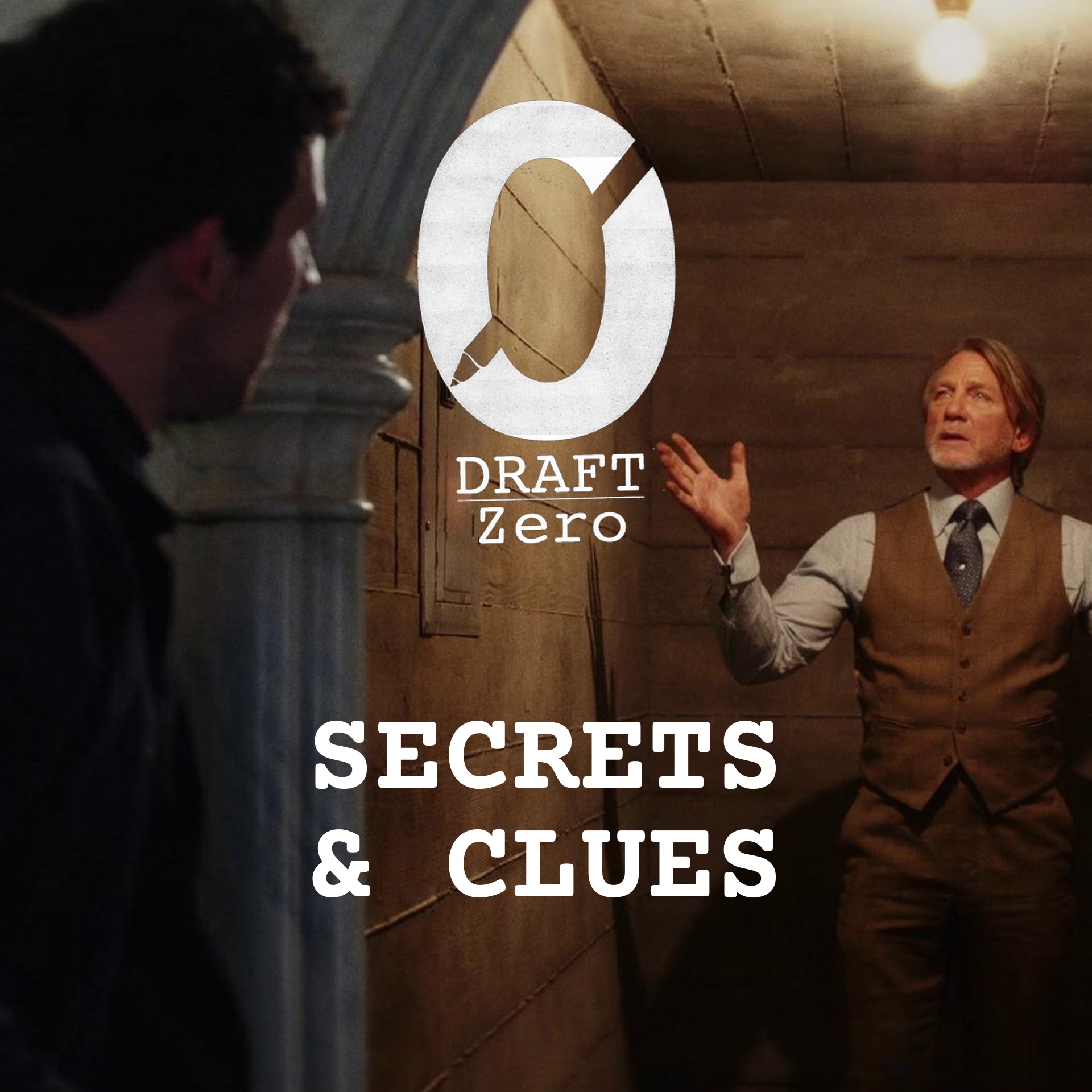
AI✦Mel and Stu stress that information puts characters in danger and danger rewards them with information--a feedback loop that keeps raising what’s at risk for both detective and suspect.✦
Listen if you want to understand how hidden information drives character motivation and plot structure!
▶
More Info
“Getting information puts your character in danger. And danger rewards your character with information." — One of three ideas we steal from game design in this episode. In this two part series, we talk about how secrets, clues and hidden information motivate characters and may (or may not) help you plot from a character perspective. Part One (this episode) looks at WAKE UP DEAD MAN; while Part Two looks at SIDE EFFECTS, and the pilot episode of SHRINKING…
→
How do the antagonistic forces in your story escalate distinctly from the protagonists' journey?
AI✦Chas and Stu dissect how Sinners generates three parallel stakes--Smoke trying to solve, Annie trying to survive, Grace trying to save--all operating against the same dual antagonistic forces.✦
Listen to strengthen your story by focusing on the antagonistic forces in your script.
▶
More Info
We often struggle to develop the middle stages of a story. Could this be because we focus on our protagonists’ journeys and plot structure more than on how the antagonistic powers are awakened, wronged, discovered, gathering strength and revealing themselves…
→
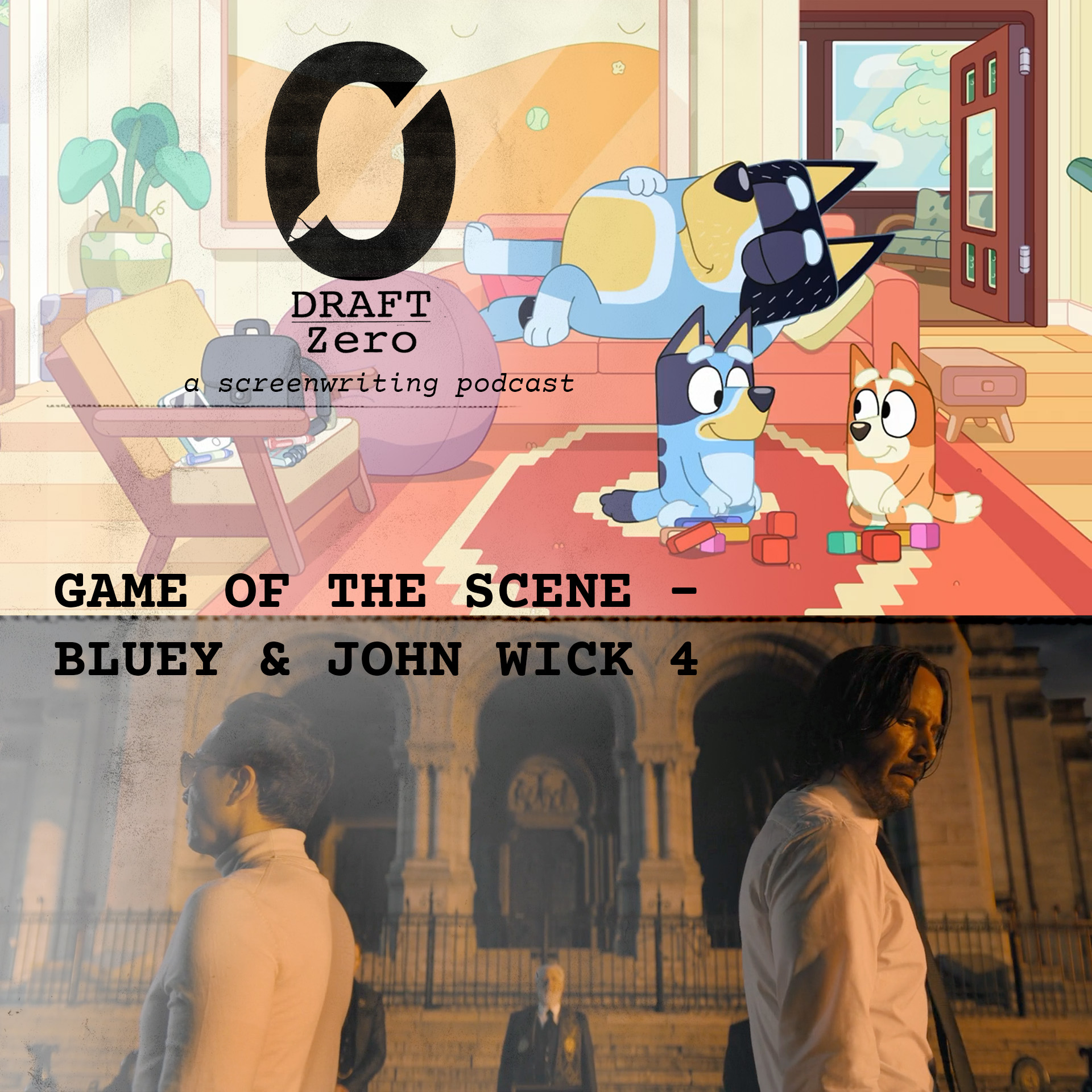
How can 'games' help us write better scenes?
AI✦The win conditions of a scene’s game directly determine what’s at stake for each player and why the outcome matters.✦
Listen to make your scene writing more dynamic (by looking at the underlying game)
▶
More Info
Stu and Chas turn their attention to a topic that has long eluded them: the game of the scene. We look at how considering the game that characters are playing — its rules, arenas, players, referees, and win conditions — can help you write more dynamic scenes…
→
How can interweaving two timelines change how we feel about a character?
AI✦Stu, Mel, and Chas examine how Sorkin’s flash-forward technique manages the absence of stakes--the audience already knows Facebook succeeded--and how that structural choice reshapes the emotional contract.✦
Listen to understand how manage stakes when you're using flashforwards.
▶
More Info
In this Part 2 of Interweaving Timelines (aka The Stu Monologue Episode), Mel, Chas and Stu tackle Sorkin/Fincher’s The Social Network. As you’ll hear, it is clearly Stu’s favourite of the examples we cover and, ah,
not Mel’s favourite. While all three bring their own biases and opinions on the reality of Facebook as it has become, we do manage to put the destruction of democracy to one side to actually analyse the meticulous craft that this film displays…
→
What to do when a reader says "I don't buy that he/she would do that"?
AI✦Understanding what’s at stake for a character--what they stand to gain or lose--is essential to making their motivations land with audiences at pivotal story moments.✦
Listen if you're writing a scene where your character does something 'out of character' and your readers to buy it.
▶
More Info
Chas & Stu look at examples of
good character motivation. We’ve all watched movies where we don’t believe the motivation of a character or characters. We may have even written scripts where readers don’t buy the character’s choices. And that’s often a real problem because most of these choices coincide with key structural moments — e.g. the moments where the characters decide to do something “out of character” in order to progress to the next part of the story. To help us solve the problem of how to improve our character motivations, in this episode we explore great examples of character motivation and how they have helped the audience believe a character’s decision…
→
How do systems pressure your characters to change?
AI✦When the system itself is the antagonist, stakes shift from personal survival to existential questions about whether a character can resist, survive within, or dismantle the pressures bearing down on them.✦
Listen if you want to use how societal, governmental, or environmental forces as villains.
▶
More Info
This is Part Four (!!) of our Five Part Epic Exploration into antagonists forces and sources of conflict. In this episode we explore “system/world/society” antagonists. While stereotypically associated with science-fiction, these sources of conflict are found across genres…
→
How can characters be their own antagonist?
AI✦When a character is their own antagonist, the stakes operate on both internal and relational levels--what they stand to lose emotionally and what their self-sabotage costs those around them.✦
Listen if you want to understand how protagonists can serve as their own antagonist and how antagonistic forces shape a character's journey
▶
More Info
In Part Two of our Five Part Epic Exploration™ into antagonists, Chas & Stu take a look at “vs self” stories. Stories where the protagonist (or main character) serves as their own antagonist as well as the antagonist for those around them…
→
How does a screenwriter collaborate with a director on an existing property?
AI✦Sequels and horror both operate on raised stakes, and Aaron’s work on the big-budget follow-up to the ‘infamous’ WOLF CREEK necessarily confronts how to escalate what audiences already fear.✦
Listen if you're co-writing and need to figure out where your voice ends and your collaborator's begins.
▶
More Info
In this halloween special, Chas (sans Stu) is joined by a very special guest... Aaron Sterns the co-writer of WOLF CREEK 2 -- the big budget sequel to the infamous WOLF CREEK, also directed by Greg McLean. Chas and Aaron talk horror, anti-horror, collaboration, novels and how a screenwriter works within an existing franchise…
→
Is the MacGuffin truly interchangable, and how does it impact on your character writing?
AI✦Brad and the hosts uncover how the MacGuffin’s personal significance to your protagonist elevates the entire adventure from a McGuffin-chase to a story where something actually matters beyond plot mechanics.✦
Listen to discover why the MacGuffin's emotional weight--not its function--determines whether your audience cares enough to follow the entire adventure.
▶
More Info
Stu and Chas are joined by a special guest - Scriptmag contributor Brad Johnson - to discuss how the choice of the MacGuffin can impact on the quality of an action/adventure film. To test this thesis, our heroes compare the auspicious originals of two iconic franchise with their, um, less-than-auspicious 4th instalments (in other words we compare RAIDERS OF THE LOST ARK with KINGDOM OF THE CRYSTAL SKULL and THE CURSE OF THE BLACK PEARL with ON STRANGER TIDES) as well as look at two recent & original entries into the genre, namely NATIONAL TREASURE and PRINCE OF PERSIA…
→
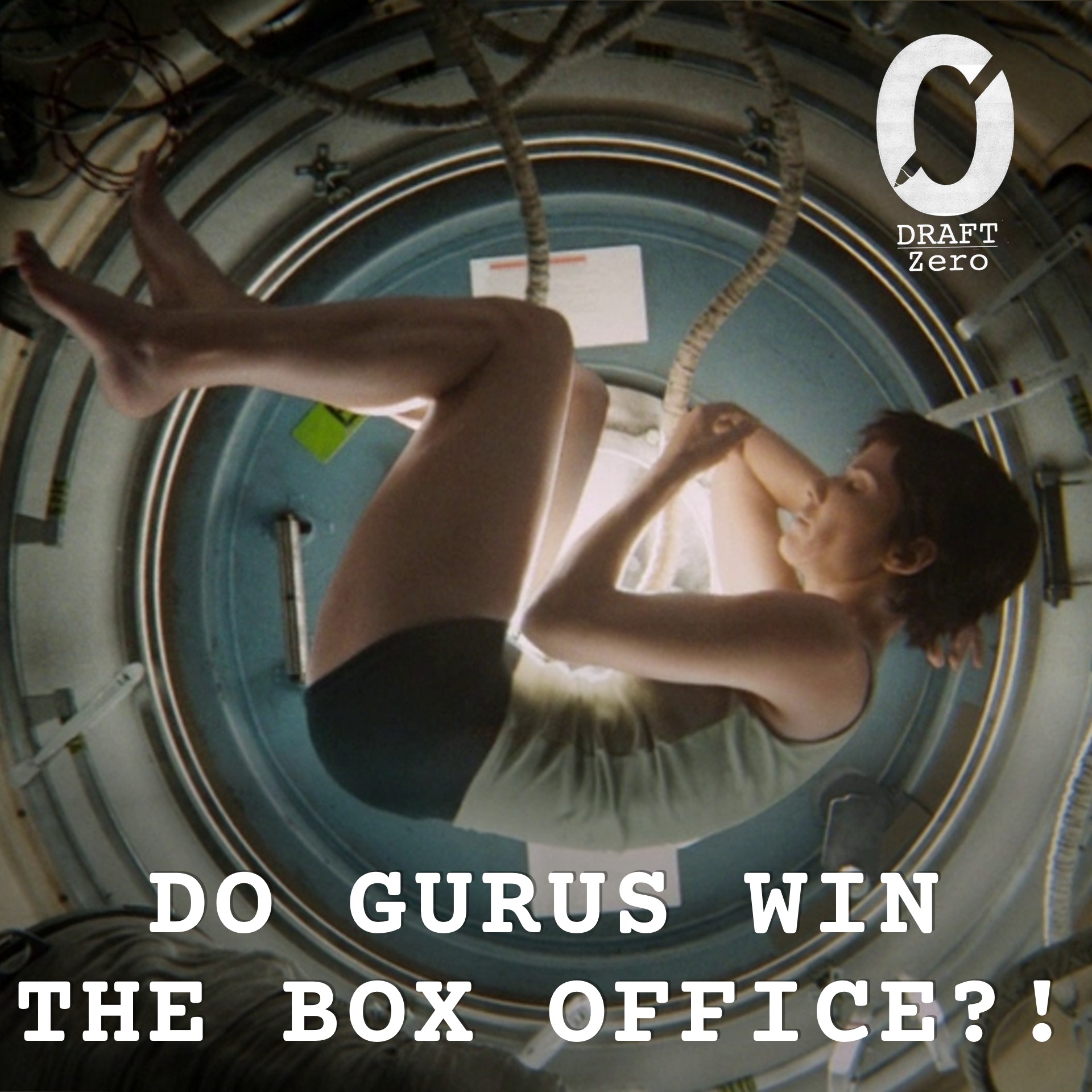
Do the biggest original films of 2013 follow more archetypal - or formulaic - structures?
AI✦The episode contrasts how GRAVITY establishes existential, high-concept stakes against FROZEN’s emotional character stakes, revealing different structural priorities in original blockbusters.✦
Listen if you need to know which guru frameworks actually deliver in Act Three.
▶
More Info
Part 2 of our Screenplay Gurus series takes the same lens from Part 1 — Vogler, Snyder and Hauge — and points it at the two highest-grossing original films of 2013: GRAVITY and FROZEN. No franchise, no sequel. Just the two films that audiences went to see in the biggest numbers that year, and the question of what their scripts actually look like when you run them against the guru formulas…
→
Can screenplay competitions be worth it?
AI✦Throughout the interviews, the hosts and guests weigh the financial and psychological stakes of entering competitions against the actual return on investment for emerging writers.✦
Listen if you're considering entering a screenplay competition and want to hear from writers and industry professionals about whether it's a worthwhile investment!
▶
More Info
After being repeatedly asked by listeners for thoughts on screenplay competitions, Stu and Chas go full back matter for this special episode. They tackle the question - do comps just feeding the hope machine or are they a valid investment? - in their typical detailed (i.e. long) style. With their differing perspectives, Stu (a director looking for material) and Chas (a writer keen for exposure), talk to an impressive roster of guests. We start with Gordy Hoffman, founder and judge of the Bluecat Screenplay Competition; repeat Austin Film Festival attendees - first for the screenplay and now for the finished web series of EX BEST - Diana Gettinger & Monica Hewes; Launchpad 2014 finalist Tony Pitman; and Insite Competition winner Blake Ashford, whose winning script CUT SNAKE hit cinemas in 2015... ten years after winning the competition…
→