DRAFT ZERO
§ RESOURCES / TOPICS / Character Flaw

Character Flaw

A bias, limitation, imperfection, or deficiency present in a character who may be otherwise functional. Can be a problem that directly affects actions and abilities (e.g. a violent temper), or a simpler foible affecting motives and social interactions. Flaws add complexity, depth, and humanity to characters. Also known as heroic flaw or fatal flaw. Distinct from character-wound — the flaw is the behavioural pattern (the how); the wound is the underlying psychological pain that generates it (the why).

References


"What’s really clever is here, and the other scripts do this as well, is normally in drama you wouldn’t have the flaw stated so early and in such obvious terms. Often if it comes at all, it’s like at the end of the second act, you know. And here they tell the audience and they tell the character what their flaw is, but they show them oblivious to it... And then this actually leads me to think...it actually sets up a dramatic question for the audience, right? You’re told what is wrong with this guy. And so the question becomes, when will he realize or how will he realize? It’s a subtle question, but I think it is in there. And then part of what you’re compelled to do is watch to see, because you’re not trying to work out who this character is. You’re actually wanting to see how they will ultimately change."

— Stu Willis  |  DZ-3: Making Unlikeable Protagonists Compelling

Start here
DZ-44: Marvel - First Acts and Establishing Characters

How can your first act effectively establish your character journey?
AIStu and Chas give significant attention to character flaws as a structural tool for first acts, examining how they function across IRON MAN, GUARDIANS OF THE GALAXY, and DOCTOR STRANGE.
⏱ 2h 7m
17 SEP 2017
Listen if your first act exposition feels clunky--the MCU has a schema for burying backstory inside character introductions.
More Info
First Acts are hard. They have to set so much in motion, especially setting up characters. To help them understand how to write effective first acts better, Stu and Chas turn their analytical gaze to a franchise that has been refining and reiterating its first act “schema” for over a decade... THE MARVEL CINEMATIC UNIVERSE…


KEY IDEAS

Stating The Flaw Early Sets The Question

"What's really clever is here, and the other scripts do this as well, is normally in drama you wouldn't have the flaw stated so early and in such obvious terms. Often if it comes at all, it's like at the end of the second act, you know. And here they tell the audience and they tell the character what their flaw is, but they show them oblivious to it... And then this actually leads me to think...it actually sets up a dramatic question for the audience, right? You're told what is wrong with this guy. And so the question becomes, when will he realize or how will he realize? It's a subtle question, but I think it is in there. And then part of what you're compelled to do is watch to see, because you're not trying to work out who this character is. You're actually wanting to see how they will ultimately change."

— Stu Willis (00:17:21) · DZ-3: Making Unlikeable Protagonists Compelling


Even More

DZ-50: Antagonists! 2 - vs Self

How can characters be their own antagonist?
AIThe episode examines how a protagonist’s internal flaws become the antagonistic pressure that drives their arc and shapes everyone around them in films like SHAME and MONSTER.
⏱ 1h 47m
19 APR 2018
Listen if you want to understand how protagonists can serve as their own antagonist and how antagonistic forces shape a character's journey
More Info
In Part Two of our Five Part Epic Exploration™ into antagonists, Chas & Stu take a look at “vs self” stories. Stories where the protagonist (or main character) serves as their own antagonist as well as the antagonist for those around them…


DZ-3: Making Unlikeable Protagonists Compelling
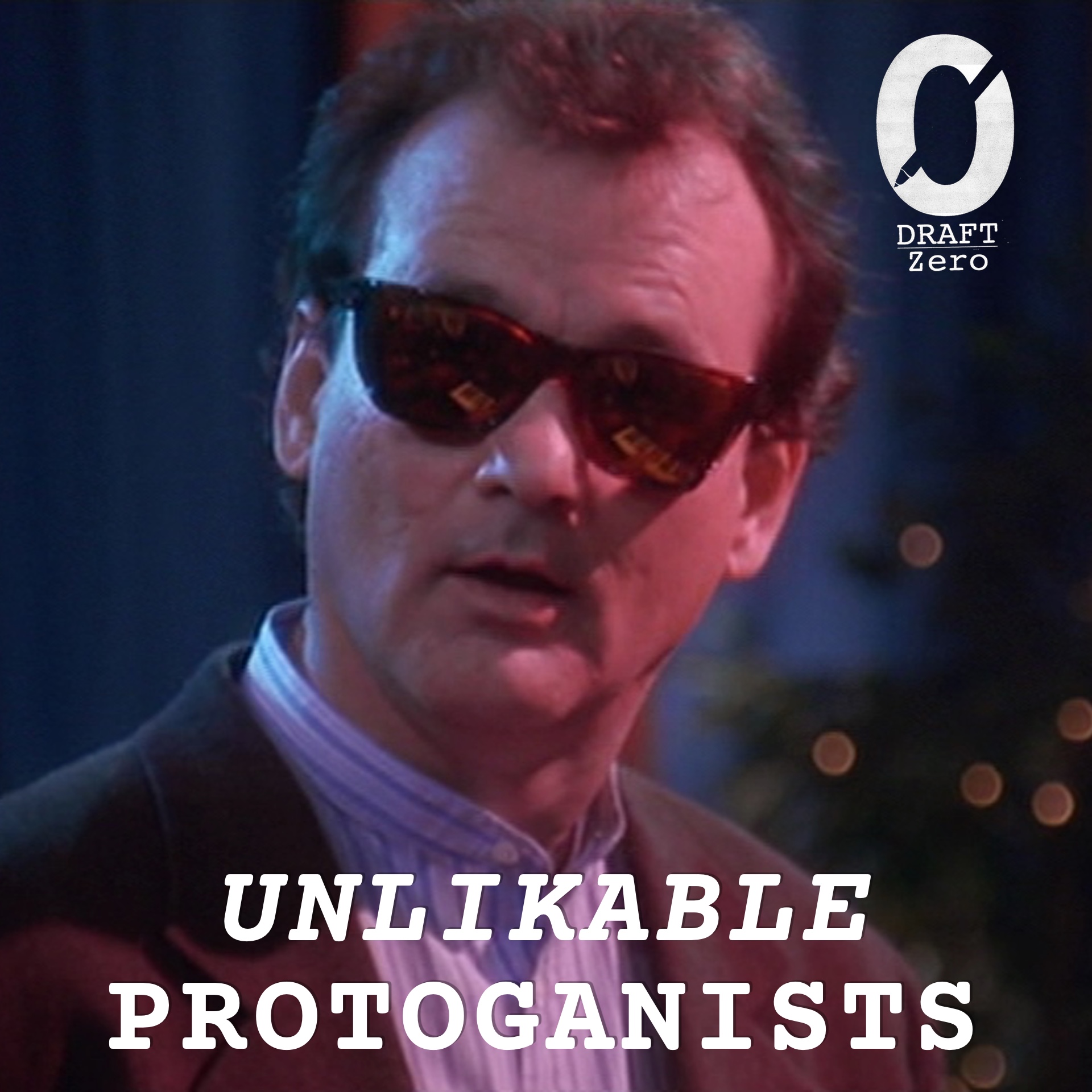
How do you keep an audience watching a character everyone in the film hates?
AIStu and Chas analyze how Hot Fuzz, As Good As It Gets, and Groundhog Day state the protagonist’s flaw explicitly within the first 20 pages, shifting the audience question from ‘what’s wrong with this guy?’ to ‘how will he ever change?’
⏱ 1h 20m
30 MAR 2014
Listen if you want to make audiences care about deeply flawed protagonists!
More Info
Stu and Chas tackle the first 20 pages of HOT FUZZ, AS GOOD AS IT GETS and GROUNDHOG DAY and try to work out what stops these a-holes protoganist from pushing the audience out of the movie…


DZ-124: Making the Despicable Compelling

How does Film Noir show us terrible people doing terrible things without endorsing it?
AIMel and Chas distinguish between characters undergoing transformative arcs and discovering their true natures, using Easy’s refusal to change and Mouse’s escalating violence to show how flaws drive character behavior across noir narratives.
⏱ 1h 10m
30 JAN 2026
Listen if you need audiences to root for characters who do terrible things
More Info

DZ-123: Flawed Characters in Noir

What can Film Noir teach us about character arcs and audience engagement?
AIMel and Chas examine how Barbara Stanwyck and Walter Neff’s behavioural patterns--self-deception, moral compromise, the speed of their descent--construct flawed characters without requiring extensive backstory to justify the transgression.
⏱ 1h 22m
31 DEC 2025
Listen if you want to write morally compromised characters without endorsing their choices.
More Info
In this two part series, Mel and Chas use Noir (the genre) as a lens to interrogate flawed characters. How can characters doing reprehensible things still engage audiences? How can you ensure representation isn’t endorsement? And whether these characters undergo transformative arcs, or simply reveal their true natures…


DZ-122: Escalating Antagonism Across Genres

How can you apply horror ideas to action and comedy?
AIIn Meet the Parents, Stu identifies Greg’s core transgression as a lie born from insecurity, and the hosts trace how that flaw escalates the manifestation sequence--showing how flaws drive the mechanics of the TOMBS cycle.
⏱ 1h 44m
1 OCT 2025
Listen to learn how thinking of your hero as the horror (for your villains) makes your script dynamic.
More Info
In this episode Chas, Stu and guest Kim Ho continue their exploration into the power(s) of antagonism and how focusing on them can develop story…