
§ RESOURCES / FILM INDEX
Fleabag (2016)
Featured In
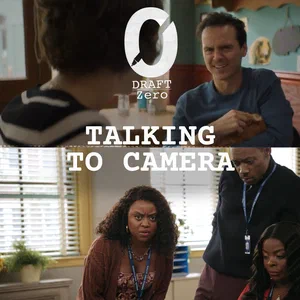
DZ-112: Breaking the 4th wall
How is the effect of breaking the 4th wall different to voiceover?
As part of our series on how filmmakers can directly communicate to the audience, we finally examine the most blatant tool of them all: when character look directly down the barrel of the camera… and thus look directly at us, the viewer. Chas, Stu and Mel take the craft tools/levers they identified in previous episodes and use them to examine the tv-version-of HIGH FIDELITY (“Top Five Breakups”), ABBOTT ELEMENTARY (“Attack Ad)”) and - of course - FLEABAG… →
Listen to understand how breaking the 4th wall directly involves the audience in a character's emotional present.
▶ More Info
As part of our series on how filmmakers can directly communicate to the audience, we finally examine the most blatant tool of them all: when character look directly down the barrel of the camera… and thus look directly at us, the viewer. Chas, Stu and Mel take the craft tools/levers they identified in previous episodes and use them to examine the tv-version-of HIGH FIDELITY (“Top Five Breakups”), ABBOTT ELEMENTARY (“Attack Ad)”) and - of course - FLEABAG… →
"These particular episodes in the second season of Fleabag: it is about revealing to us that she has been lying to herself. Those intrusive thoughts are a defense mechanism that gets broken down."
— chas | DZ-112: Breaking the 4th wall
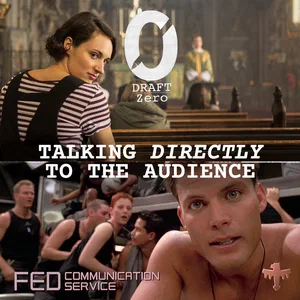
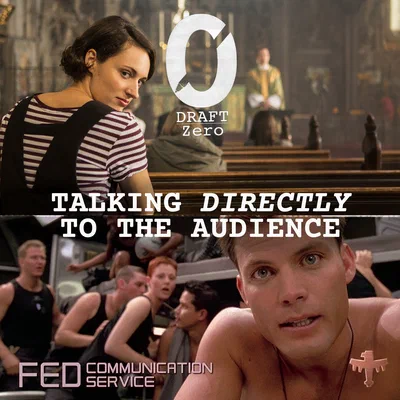
DZ-109: Talking DIRECTLY to your audience
What are the different ways a filmmaker can ask something of the audience?
AI✦Analyses how voiceover and fourth-wall techniques function across the diegetic-to-non-diegetic spectrum, interrogating whether Fleabag’s direct address serves exposition, character psychology, or tactical manipulation of audience perspective.✦
Listen if you've wondered what a character actually wants when they're talking directly to the audience!?
▶ More Info
What are the different ways a filmmaker can ask something of the audience… →
Films:
Fight Club (1999)
, Fleabag (2016)
, The Big Short (2015)
, F for Fake (1973)
, Star Wars (1977)

DZ-84: Choices & Decisions 1 - Booksmart
What is the difference between choice and decision when it comes to characters?
In order to better understand dramatising of character, Chas and Stu take a very draft zero look at very specific tool: choices and decisions. We analyse three films through the decisions made by their characters. In particular, how the audience understanding of: the choice available, the considered decision itself, and the consequence changes how we feel about these characters. And how separating those three things can create different emotional effects on your audience… →
Listen how the separation of choice, decision, and consequence (for a character) creates emotional impact.
▶ More Info
In order to better understand dramatising of character, Chas and Stu take a very draft zero look at very specific tool: choices and decisions. We analyse three films through the decisions made by their characters. In particular, how the audience understanding of: the choice available, the considered decision itself, and the consequence changes how we feel about these characters. And how separating those three things can create different emotional effects on your audience… →
Films:
Booksmart (2019)
, Se7en (1995)
, Star Wars (1977)
, The Farewell (2019)
, Wrath of Man (2021)
, Fleabag (2016)
Shows:
Fleabag
DZ-63: Tools for Better Dialogue 2 - Hook and Eye
How can you create flow and contrast in your dialogue?
A full three years after the first instalment (and one of our most popular), Stu and Chas have kidnapped Stephen Cleary to once again develop some craft tools around dialogue. It would be fair to say that - in that time - all three have learnt a lot more about dialogue than they knew in 2016. It would be also fair to say that Stephen perhaps learnt a little more through his research into “genderlect”… →
Listen when you're rewriting dialogue and want to create connection between characters.
▶ More Info
A full three years after the first instalment (and one of our most popular), Stu and Chas have kidnapped Stephen Cleary to once again develop some craft tools around dialogue. It would be fair to say that - in that time - all three have learnt a lot more about dialogue than they knew in 2016. It would be also fair to say that Stephen perhaps learnt a little more through his research into “genderlect”… →
DZ-60: Unfilmables 1 - Engaging imagination
How can unfilmables enhance the experience of your script?
*AKA Why your screenwriting guru is wrong *… →
Listen to discover how *produced* screenplays use unfilmables to shape tone, performance, and humour on the page.
▶ More Info
*AKA Why your screenwriting guru is wrong *… →
Films:
Lethal Weapon (1987)
, Hereditary (2018)
, A Quiet Place (2018)
, Killing Them Softly (2012)
, Spartan (2004)
, The Girl on the Train (2016)
, The Nice Guys (2016)
, Drive (2011)
, Michael Clayton (2007)
, The Tree of Life (2011)
, Three Billboards Outside Ebbing, Missouri (2017)
, Killing Eve (2018)
, Fleabag (2016)
, Sharp Objects (2018)
, Battlestar Galactica (2004)
Referenced In
Also on Shot Zero
- ↗ Week 84: Socials Roundup 2024-08-21