
§ RESOURCES / TOPICS / Thematic Questions
Thematic Questions
Every episode covering Thematic Questions.

DZ-54: Thematic Sequences
How does removing character and plot question force your audience to engage with theme?
AI✦By removing character and plot questions altogether, filmmakers create space for thematic questions to become the primary driver of audience attention and interpretation.✦
Listen if you want to make theme your primary driver (for a sequence)
▶ More Info
Chas and Stu are joined, once again, by the inestimable Stephen Cleary. This episode is a spiritual sequel to our last episode with Stephen, the one on sequence structure. That episode explored how sequences could be broken into plot, character, and plot/character sequences… →
Films:
Love Actually (2003)
, The Exterminating Angel (1962)
, Apocalypse Now (1979)
, In the Bedroom (2001)
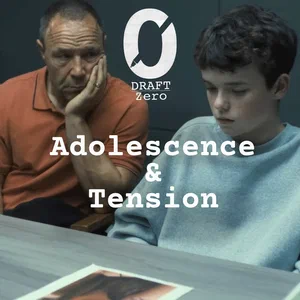
DZ-118: ADOLESCENCE -- How Questions Create Dramatic Tension
How do dramatic questions create tension?
AI✦By episode four, the show has shifted entirely away from plot urgency toward thematic investigation--Chas notes how a scene between Eddie and Amanda discussing their responsibility as parents taps into sociology and social norms, making the drama about what these questions mean rather than what happens next.✦
Listen when you need tension without external stakes--subtext, stillness, and thematic weight do the work.
▶ More Info
In this episode, Stu and Chas delve into the cultural phenomenon of ADOLESCENCE. We try to find the craft tools that have made the show so compelling and such a catalyst for conversation… →
Films:
Adolescence (2025)
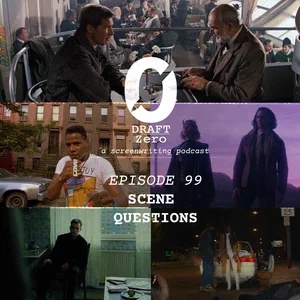
DZ-99: Scene Questions
How do audience questions shape scenes?
AI✦Chas and Stu identify thematic questions as a distinct class of audience inquiry that operates alongside character and plot questions to give scenes philosophical weight.✦
Listen if learn how to structure individual scenes through the questions you pose to your audience!
▶ More Info
Inspired by our earlier episodes on sequences, Chas and Stu narrow their focus to look at the atomic unit of screen storytelling: the scene. In particular, we breakdown how question and answers prompted in the audience structure individual scenes… →
Films:
Loki (2021)
, Indiana Jones and the Last Crusade (1989)
, The Bourne Supremacy (2004)
, Queen & Slim (2019)
, Do the Right Thing (1989)

DZ-92: Insightful Recognition in Powerful Endings
How can endings prompt an audience to reflect on your story?
AI✦By studying how anagnorisis can be directed toward an audience, Stu and Chas reveal craft tools for endings that force viewers to reckon with the deeper thematic question of what the story was really about.✦
Listen if you want to write endings that make audiences pause and ponder (in a good way, obvs)
▶ More Info
Stu & Chas set out to explore what makes certain endings powerful, in particular those of LA LA LAND, INCEPTION, NO COUNTRY FOR OLD MEN and TURNING RED. The lens they bring to those endings is Aristotle’s moment of “anagnorisis” (don’t worry - we can’t pronounce it either), traditionally when a character moves from ignorance to knowledge (particularly of self)… →
DZ-87: Keeping Genre Fresh
How do you deliver on the emotional contract of a genre while surprising the audience?
AI✦Each of the featured films uses genre machinery to raise thematic stakes -- the horror of GET OUT operates through racial anxiety, PROMISING YOUNG WOMAN through victim trauma, THE INVISIBLE MAN through power and visibility.✦
Listen when you're writing within a genre but terrified you'll deliver something your audience has already seen.
▶ More Info
In tackling this enormous topic, Stu and Chads enlist professional TV writer and director Kodie Bedford, someone who has somehow managed to defy genre pigeon-holing by writing mystery, comedy and vampire shows… →