DRAFT ZERO
§ RESOURCES / TOPICS / Emotional Event

Emotional Event

Every episode covering Emotional Event.

Related Videos

What is an Emotional Event?

What is an Emotional Event?


"Thinking of every scene and looking for the emotional event. I mean, that’s what I came into this and going, looking for what the emotional events are is really useful and challenging yourself."

— Stu Willis  |  DZ-108: The Emotional Event with Judith Weston

Start here
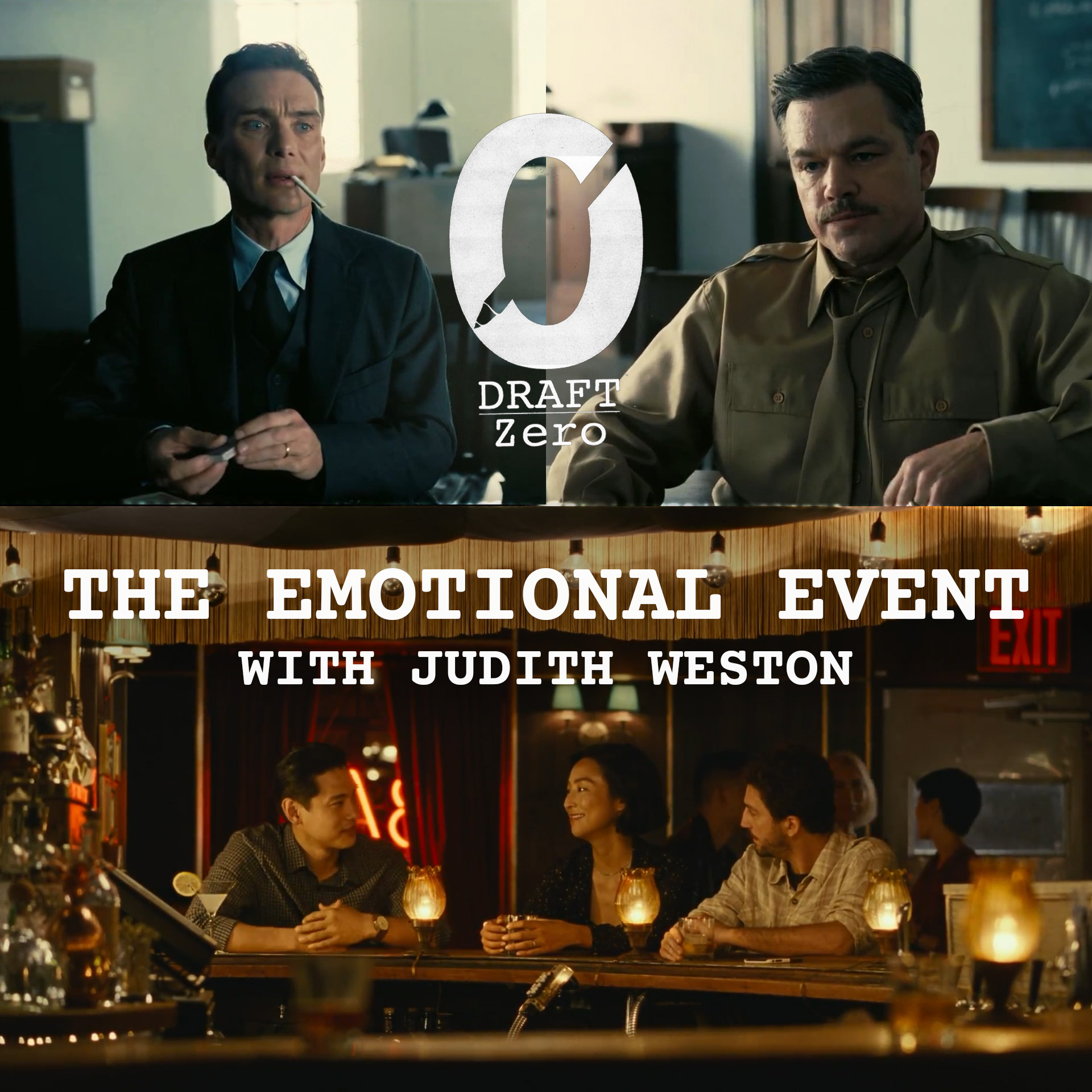
DZ-108: The Emotional Event with Judith Weston

How and why should every scene have an emotional event?
AIJudith Weston frames the emotional event as the core unit of scene work--a shift in the relationship between characters rather than plot advancement--and Chas, Stu, and Judith dissect how this concept lives on the page through close reading of scenes from Oppenheimer, Casino Royale, and Past Lives.
⏱ 1h 37m
31 MAR 2024
Listen to understand why a scene's power lives in what shifts between characters, not what happens to them.
More Info

KEY IDEAS

Emotional Event as Plot Resolution

"He doesn't solve the plot until he has an emotional event with his son. The emotional event is that his son's disconnected from him. We get this sense that they're distant from each other. Well, we don't even get a sense. We see it. And it's only later on when him and his son are in a room and he basically learns that he needs to listen to these kids that he's able to, quote unquote, solve the plot."

— Stu Willis (00:35:09) · DZ-118: ADOLESCENCE -- How Questions Create Dramatic Tension

Every Scene Needs an Emotional Event

"If you think the scene is just there to give the audience information, then you need to look into it further and find out what the emotional event is."

— Stu Willis (00:08:02) · DZ-108: The Emotional Event with Judith Weston

Every Line as an Emotional Event

"Almost every line feels like an emotional event. Like, every exchange feels like them negotiating their relationship, and their relationship is shifting."

— Stu Willis (01:21:34) · DZ-108: The Emotional Event with Judith Weston

Finding the Emotional Event in Scenes

"Thinking of every scene and looking for the emotional event. I mean, that's what I came into this and going, looking for what the emotional events are is really useful and challenging yourself."

— Stu Willis (01:30:42) · DZ-108: The Emotional Event with Judith Weston

From Subtext To Text

"The initial section of the scene is like you said, the sparring, this back and forth, establishing of bona fides. And now they're actually going to talk. It comes out of subtext into text. We're now going to talk about why we're here."

— Chas Fisher (00:26:42) · DZ-108: The Emotional Event with Judith Weston


Even More

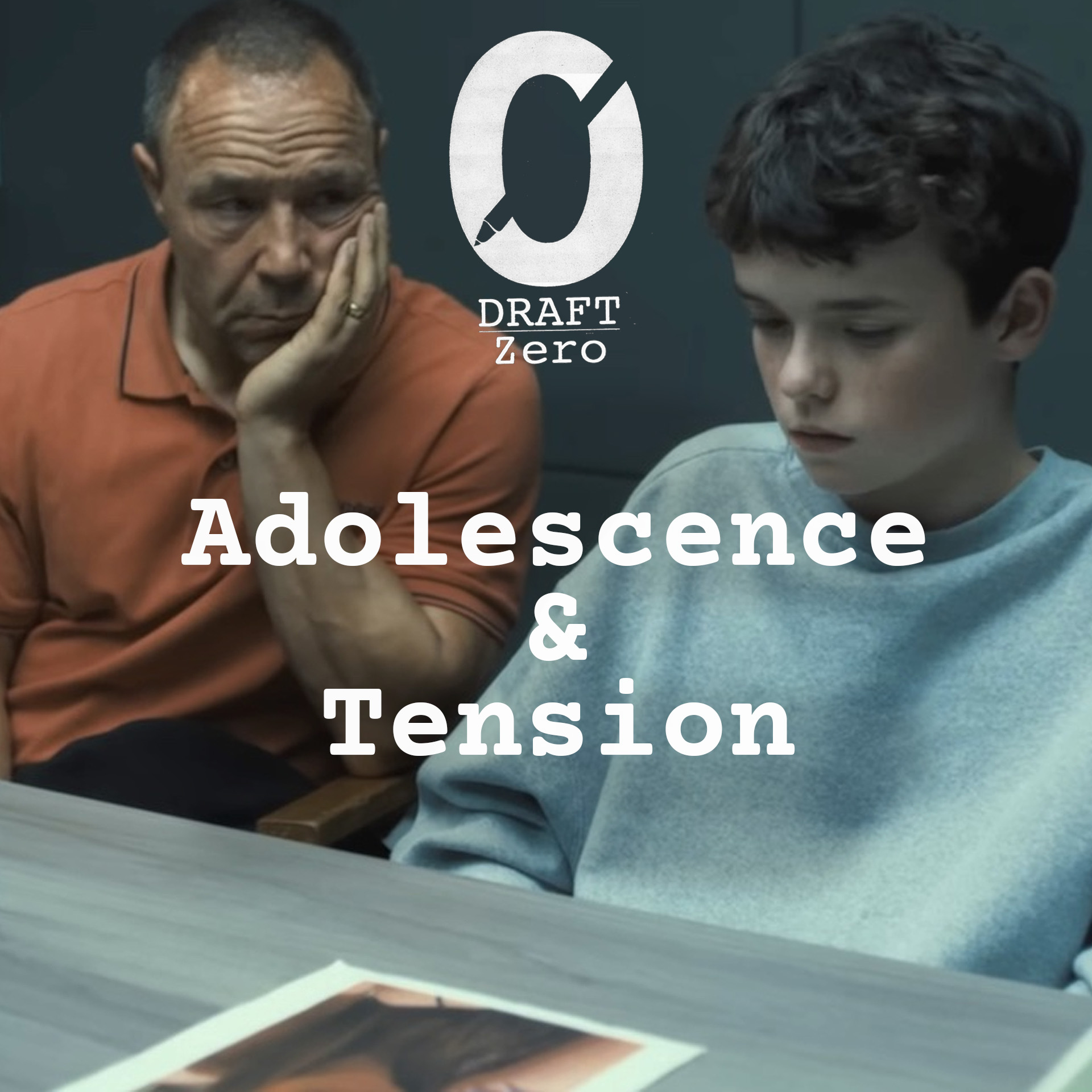
DZ-118: ADOLESCENCE -- How Questions Create Dramatic Tension

How do dramatic questions create tension?
AIThe episode isolates emotional events--Eddie realizing his son’s disconnection, Jamie losing his temper with the psychologist, Eddie’s conversation with Amanda--as the scenes where character questions get answered and thematic weight accumulates.
⏱ 2h 0m
1 MAY 2025
Listen when you need tension without external stakes--subtext, stillness, and thematic weight do the work.
More Info
In this episode, Stu and Chas delve into the cultural phenomenon of ADOLESCENCE. We try to find the craft tools that have made the show so compelling and such a catalyst for conversation…


DZ-79: Interweaving Timelines 2 - The Social Network

How can interweaving two timelines change how we feel about a character?
AIThe hosts examine how the structural choice to interweave timelines creates a different emotional experience than linear storytelling, making the audience’s feelings about Mark contingent on when and how they receive information about him.
⏱ 1h 37m
30 APR 2021
Listen to understand how manage stakes when you're using flashforwards.
More Info
In this Part 2 of Interweaving Timelines (aka The Stu Monologue Episode), Mel, Chas and Stu tackle Sorkin/Fincher’s The Social Network. As you’ll hear, it is clearly Stu’s favourite of the examples we cover and, ah, not Mel’s favourite. While all three bring their own biases and opinions on the reality of Facebook as it has become, we do manage to put the destruction of democracy to one side to actually analyse the meticulous craft that this film displays…


DZ-114: Climaxes in CHALLENGERS

How does ending your story on the climax affect audience experience?
AIUsing Judith Weston’s framework, Chas describes the final embrace as ‘an emotional nuclear bomb’ where all three sides of the triangle ‘snap back together’ after two hours of breaking apart.
⏱ 1h 17m
29 NOV 2024
Listen to understand how withholding resolution can make your story great!
More Info
While Stu is on show, Mel and Chas sit down to analyse the meaning behind the ending of 2024’s CHALLENGERS, especially when - upon reading the script - the most impactful moment of the ending on screen (for Chas in particular) is not written on the page…


DZ-38: Excelling at Exposition (Part 2)

How can exposition twist your story in new directions?
AIThe episode frames exposition as capable of providing emotional payoff alongside information delivery, turning a technical necessity into a moment that lands emotionally.
⏱ 1h 52m
6 DEC 2016
Listen to learn how to use exposition as dramatic revelation rather than mere information delivery.
More Info
In the second part of Draft Zero’s two-part episode on “Exposition”, Stu & Chas take an even deeper look at this notoriously challenging part of screenwriting. For many stories there are pre-existing facts (or given circumstances) that need to be communicated to an audience, and often we rely on dialogue to do it. But exposition can do more than just communicate, it can serve as dramatic revelation that twists a story into a new direction or provides an emotional payoff - or both!. So how do great writers make exposition work for the story, rather than just tell audience stuff they need to know? And how can writers go wrong…