
§ RESOURCES / TOPICS / Character Depth
Character Depth
Every episode covering Character Depth.
Related Videos
The Intimacy Spectrum
"It’s great performance because there’s a warmth to him... he obviously loves Sophie but there is still a distance there and they found a way to kind of capture that."
— Stu Willis | DZ-104: Characters Alone - Dramatizing the Internal
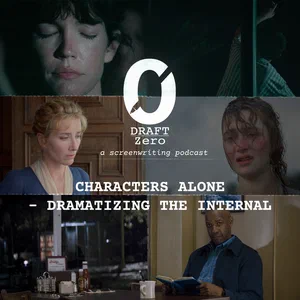
DZ-104: Characters Alone - Dramatizing the Internal
How can scenes where characters are alone increase our connection with them?
AI✦Moments of vulnerability in isolation allow characters to shed their social performance, which Chas and Stu argue deepens the audience’s understanding of who they actually are.✦
Listen to understand how solitude reveals character interiority and deepens audience connection
▶ More Info
In this episode, we explore the audience’s connection with characters through the lens of characters being alone… →

DZ-93: Talismans (Part 1)
How can you use physical objects to reveal inner character?
AI✦A talisman works as a craft tool because what a character chooses to carry, protect, or obsess over exposes their wounds, values, and psychology in ways dialogue or exposition cannot.✦
Listen to so you can write talismans that are powerful tools for accessing character!
▶ More Info
In this series, Chas and Stu discuss TALISMANS. Physical objects that are imbued with meaning by a character or characters. They’re a powerful tool to access inner character… →
Films:
Thor: Love and Thunder (2022)
, In the Mood for Love (2000)
, Cast Away (2000)
, The Dark Knight (2008)
, Mad Max: Fury Road (2015)
DZ-35: Driving Characters or Character Driven?
How can films maintain audience interest without stakes or plot questions?
AI✦A character study demands the kind of close examination that reveals who someone is beneath the surface, and that’s exactly what CHEF, HAPPY-GO-LUCKY, and AMOUR ask their audiences to witness.✦
Listen if you're writing a character study and unsure how to build momentum without external conflict.
▶ More Info
Continuing their focus on “character”, Stuart and Chas take a close look at films that may be considered character-driven... or rather character studies... or just plot-lite films? Whatever you call them, these films — CHEF, HAPPY-GO-LUCKY, and AMOUR — let their plots take a back seat to a closer examination of their characters. Stuart and Chas dive in to investigate how, without plot driving the story forward, do these films maintain our interest? We talk Mike Leigh’s idea of the ‘Running Condition’, Character Choice, SceneWork and the myriad other techniques the filmmakers use to keep us interested… →
DZ-20: Writing Strong Secondary Characters - Trinity, Bechdel and a Bamboo Killer
How can the Trinity Syndrome help you write better secondary characters?
AI✦Emily Blake, Chas, and Stu demonstrate that writing better female characters isn’t about gender--it’s about the fundamental craft of building characters with genuine interiority and purpose.✦
Listen when you're writing secondary female characters and need them to have more depth.
▶ More Info
Chas & Stu are joined by Bamboo Killer (aka Emily Blake) - one of the co-hosts of the Chicks Who Script podcast. They take a critical look at secondary female characters in mainstream movies through the lens of the oft-cited Bechdel test and the new, less-cited, Trinity Syndrome. The Trinity Syndrome berates movies for creating a “Strong Female Character With Nothing To Do” (like Trinity in the Matrix sequels) and raises a list of questions for filmmakers to ask themselves about their (female) characters… →
Films:
Mission: Impossible - Ghost Protocol (2011)
, Edge of Tomorrow (2014)
, Dawn of the Planet of the Apes (2014)
, How to Train Your Dragon 2 (2014)
DZ-19: Car-Crash Characters
How do you make unlikeable characters compelling to watch... in drama?
AI✦The episode analyzes how AMERICAN HISTORY X, YOUNG ADULT, and NIGHTCRAWLER create dimensionality in their protagonists so audiences stay invested despite moral objection.✦
Listen when you're writing a protagonist who does terrible things but you need the audience to keep watching.
▶ More Info
Stu and Chas revisit a topic from a year ago: how do screenwriters make unlikeable characters compelling? This time, we turn our focus to dramas and analyse how AMERICAN HISTORY X, YOUNG ADULT, NIGHTCRAWLER all make their asshole protagonists compelling to watch. We expand our original list of five writer’s tools to include a few more for your tool belt… →
DZ-122: Escalating Antagonism Across Genres
How can you apply horror ideas to action and comedy?
AI✦Writing TOMBS for each character in a multi-antagonist story--even when they’re all aligned--gives specificity to their actions and ensures everything escalates for everyone in every single way, as Chas demonstrates with her chamber piece.✦
Listen to learn how thinking of your hero as the horror (for your villains) makes your script dynamic.
▶ More Info
In this episode Chas, Stu and guest Kim Ho continue their exploration into the power(s) of antagonism and how focusing on them can develop story… →
DZ-97: Ensembles 2 - Servicing Characters
How do you give your audience access to a lot of characters?
AI✦Mel, Stu and Chas examine how the spectrum between private and public behaviour reveals character dimension within an ensemble context.✦
Listen if you're writing ensemble stories and want to discover tools for giving all your characters adimension
▶ More Info
In Part 2 of our exploration into ensemble stories, Stu, Chas and Mel examine films whose plot and genre require a lot of characters. Thus we tackle a team sports film (PITCH PERFECT), a murder mystery (GLASS ONION), a slasher (SCREAM 2022) and a family holiday flick (THE FAMILY STONE)… →
Films:
Pitch Perfect (2012)
, Glass Onion: A Knives Out Mystery (2022)
, Scream (2022)
, The Family Stone (2005)
DZ-84: Choices & Decisions 1 - Booksmart
What is the difference between choice and decision when it comes to characters?
AI✦Separating choice from decision reveals character complexity--how the same options can produce different decisions depending on what a character knows, values, or fears.✦
Listen how the separation of choice, decision, and consequence (for a character) creates emotional impact.
▶ More Info
In order to better understand dramatising of character, Chas and Stu take a very draft zero look at very specific tool: choices and decisions. We analyse three films through the decisions made by their characters. In particular, how the audience understanding of: the choice available, the considered decision itself, and the consequence changes how we feel about these characters. And how separating those three things can create different emotional effects on your audience… →
Films:
Booksmart (2019)
, Se7en (1995)
, Star Wars (1977)
, The Farewell (2019)
, Wrath of Man (2021)
, Fleabag (2016)
Shows:
Fleabag
DZ-66: The Mandalorian and The Rise of Skywalker - Audience Knowledge vs Character Motivation
How does audience knowledge affect your character's motivations?
AI✦The in-depth discussion of Rey, Kylo, Poe, and Palpatine across The Mandalorian and The Rise of Skywalker reveals how serialized storytelling either deepens or complicates character complexity through accumulated knowledge.✦
Listen to understand how fan service weaponizes external knowledge against character logic.
▶ More Info
By Order 66: Chas and Stu are joined by special guest - filmmaker Mel Killingsworth - to talk all things Star Wars. Well. Focusing on The Mandalorian and The Rise of Skywalker and wherever else our tangents take us… →

DZ-49: Antagonists! 1 - vs Humans
What makes a strong human antagonist?
AI✦The episode’s analysis of classical villains and the swap between antagonist and protagonist roles across scenes hinges on how much complexity and interiority these characters possess.✦
Listen if you want to understand how to craft compelling antagonists who oppose your protagonist through direct human conflict
▶ More Info
Prompted by a listener (and patron of the podcast) question, Stu and Chas dive into antagonistic forces. And because Draft Zero does not do anything by halves, this is Part One of a Five Part Epic Exploration™ into antagonists; namely: vs humans, vs self, vs nature/supernatural, vs systems and “other”. aka the classic narrative conflicts… →

DZ-31: Tools for Better Dialogue 1
How does dialogue serve to reveal character?
AI✦Stephen demonstrates how specific dialogue choices--word selection, rhythm, vocabulary--build character dimension and reveal interior life without relying on exposition.✦
Listen if your want your dialogue to individualizes characters, reveal characterization, and shift status!
▶ More Info
Chas & Stu are joined once again by the renowned script developer and producer, Stephen Cleary. In the first part of our series on writing better dialogue (there will be more!), we take a close look at how dialogue serves character: individuating characters, revealing characterisation, shifting status, and much more… →
Films:
Analyze This (1999)
, Notting Hill (1999)
, The Remains of the Day (1993)
, The Avengers (2012)
DZ-14: Writing For Actors with Succession's Sarah Snook
How can we make our screenwriting more appealing to Actors?
AI✦The discussion of what attracts actors to scripts centers on creating characters with enough internal complexity and contradiction that performers have something genuine to explore.✦
Listen to understand how writers can craft more compelling material for actors (and how they approach scripts)
▶ More Info
In this episode, Chas and Stu are joined by a very special guest, SARAH SNOOK - star of Succession, Predestination, Jessabelle, and Oddball, amongst many others - to discuss ACTING and it’s relationship with WRITING… →
DZ-11: Adventure for the MacGuffin!
Is the MacGuffin truly interchangable, and how does it impact on your character writing?
AI✦Stu, Chas, and Brad show that what your protagonist cares about--and why--reveals character in ways that transcend genre, making the MacGuffin a window into your hero’s worldview and internal journey.✦
Listen to discover why the MacGuffin's emotional weight--not its function--determines whether your audience cares enough to follow the entire adventure.
▶ More Info
Stu and Chas are joined by a special guest - Scriptmag contributor Brad Johnson - to discuss how the choice of the MacGuffin can impact on the quality of an action/adventure film. To test this thesis, our heroes compare the auspicious originals of two iconic franchise with their, um, less-than-auspicious 4th instalments (in other words we compare RAIDERS OF THE LOST ARK with KINGDOM OF THE CRYSTAL SKULL and THE CURSE OF THE BLACK PEARL with ON STRANGER TIDES) as well as look at two recent & original entries into the genre, namely NATIONAL TREASURE and PRINCE OF PERSIA… →
Films:
Raiders of the Lost Ark (1981)
, Indiana Jones and the Kingdom of the Crystal Skull (2008)
, Pirates of the Caribbean: The Curse of the Black Pearl (2003)
, Pirates of the Caribbean: On Stranger Tides (2011)
, National Treasure (2004)
, Prince of Persia: The Sands of Time (2010)
DZ-8: Status Transactions
How does a shift in status or power reveal character?
AI✦A character’s response to gaining or losing status--without external plot justification--reveals dimension and complexity that wouldn’t emerge from exposition or revelation alone.✦
Listen to make your character relatinships more dynamic.
▶ More Info
Stu and Chas explore an idea they both came across studying theatre: status and by extension (or juxtaposition) power. Is a story where a character changes status or experiences loss (or gains) in power more compelling… →
Films:
The King's Speech (2010)
, The Princess Bride (1987)
, The Social Network (2010)
, True Grit (2010)