DRAFT ZERO

Words

Every episode tagged Words, newest first.

2026

"the movie is asking would he think this is a sad ending would he think this is the way to go out"

— Mel Killingsworth  |  DZ-125: Oscars One-shot - BLUE MOON
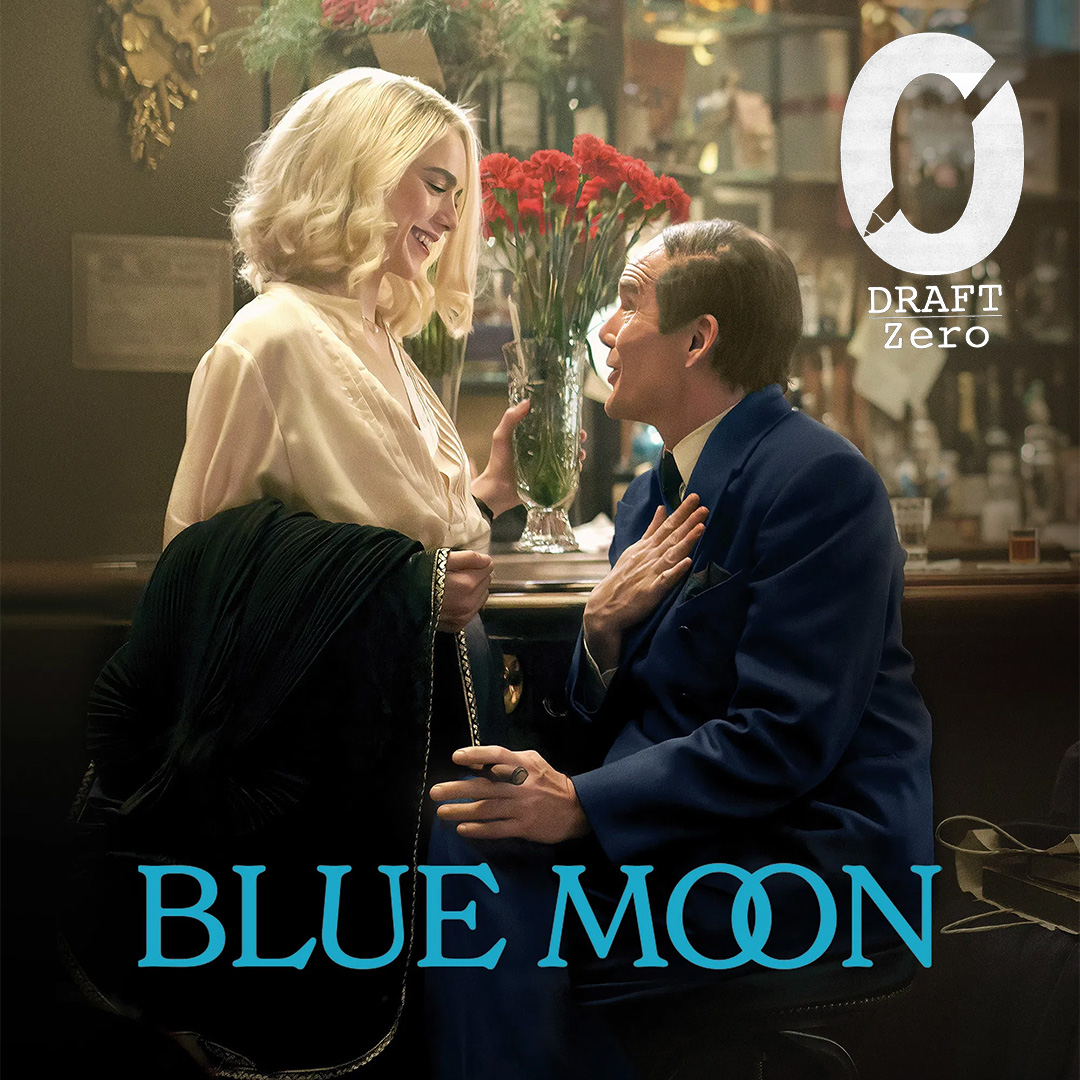
DZ-125: Oscars One-shot - BLUE MOON
What craft tools make a low-budget, contained, period drama riveting?
AIChas and Mel dissect how nearly every line of dialogue functions as a hook, a play on words, or a callback, with pop culture references woven through 1940s context in ways that don’t require prior knowledge to land, and how this demands performers who can keep up with the repartee.
⏱ 1h 18m
Structure · Character · Words | 26 FEB 2026
Listen if you want to understand how narrative POV, screenplay format, and dialogue craft can elevate a contained biopic into an Oscar-nominated film
More Info
BLUE MOON is a talky, period-drama that film about an obscure songer-writer in the 1940s. Yet, it attracted world-class talent AND Academy Award nominations, including for it’s script. Join Chas & Mel as they explore how narrative POV, interweaving relationships, hooky dialogue, and even the screenplay format itself make the script for BLUE MOON so great…


2025

"They use way more words than they need to they're deliberately overwriting. like in terms of using white space, like they're taking their time with it."

— Chas Fisher  |  DZ-116: Writing Physical Comedy

DZ-117: Pulling Off Tonal Shifts
How can we teach our audience new storytelling rules in the middle of our story?
AIChas and Mel repeatedly examine how action line description–’the big print’–signals tone and prepares audiences for shifts, particularly noting Swiss Army Man uses it ’to greater lengths to tell us how to feel as an audience.'
⏱ 2h 8m
Character · Words · Genre | 31 MAR 2025
Listen if you want to write tonal pivots that land on the page without a director's toolkit.
More Info
Following on from our episodes on establishing tone through action lines and through character, this is what we have been building up to: how to pull off a tonal switch… that does NOT throw the audience out of the film. And, in particular, how to pull that off on the page when writers don’t have framing, lighting, music, editing, etc. at our disposal…


DZ-116: Writing Physical Comedy
How do you make extended technical scenes funny on the page?
AIMel and Chas detail how judicious use of ALL CAPS, ellipses, and m-dashes in action lines recreate visual gags on the page, and when to let a paragraph go long to draw attention to itself–a technique all three scripts deploy differently.
⏱ 1h 35m
Words · Structure · Genre | 26 FEB 2025
Listen if you're writing physical comedy and have no idea how to make it work on the page
More Info
Mel joins Chas to tackle physical comedy. We limited our homework selection to extended scenes (as opposed to moments and sight gags) in live action projects and – with the help of our Patreons – selected early sequences from BRINGING UP BABY, the pilot for HAPPY ENDINGS and that wonderful food poisoning scene in BRIDESMAIDS…


2024

"She's trying to work herself out in some ways. Like it's the reason a lot of people write in their diary or self-talk or do have a running monologue or encourage that. Like she's trying to understand and explain herself and in doing so maybe hopefully help herself."

— Mel Killingsworth  |  DZ-112: Breaking the 4th wall

DZ-113: Tools For Filmmakers To Talk To The Audience
What tools help ensure that you as the filmmaker are not misunderstood?
AIMel, Stu, and Chas spend the episode cataloging how filmmakers communicate directly with audiences through meta-storytelling and structural choices that sit outside the story world.
⏱ 2h 3m
Theme · Words · Structure | 22 SEP 2024
Listen if you want to explore how you can make your creative hand visible through meta-storytelling and structural choices!?!
More Info
In our final (ha!) episode looking at Talking Directly to the Audience, we turn away from character-and-text based craft tools to look at other ways that filmmakers - whether they be directors, writers, editors, or anyone else - can make the audience feel their ‘hand’ more. To that end, Mel, Stu and Chas dive into ADAPTATION, STORIES WE TELL and THE FORTY-YEAR-OLD VERSION…


DZ-112: Breaking the 4th wall
How is the effect of breaking the 4th wall different to voiceover?
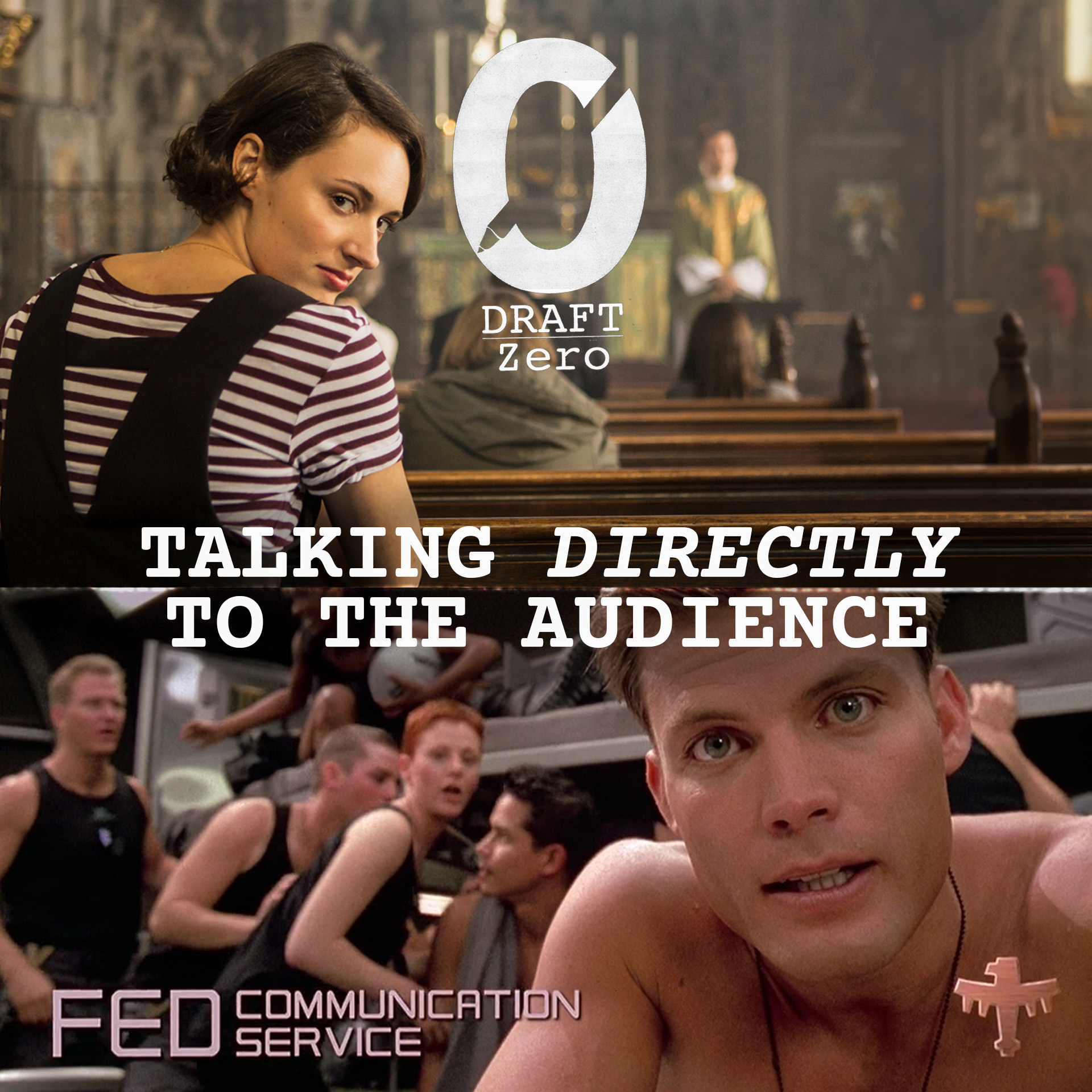
AIMel, Chas, and Stu examine breaking the fourth wall as the most blatant tool of direct audience communication, analyzing how characters looking directly at the camera create a fundamentally different effect than voiceover.
⏱ 1h 52m
Character · Words · Tone | 31 JUL 2024
Listen to understand how breaking the 4th wall directly involves the audience in a character's emotional present.
More Info
As part of our series on how filmmakers can directly communicate to the audience, we finally examine the most blatant tool of them all: when character look directly down the barrel of the camera… and thus look directly at us, the viewer. Chas, Stu and Mel take the craft tools/levers they identified in previous episodes and use them to examine the tv-version-of HIGH FIDELITY (“Top Five Breakups”), ABBOTT ELEMENTARY (“Attack Ad)”) and - of course - FLEABAG…


DZ-111: Unreliable Narrators and FIGHT CLUB
How does the unreliability of a narrator impact the way a story is told?
AIFight Club’s voiceover functions as the connective tissue that stitches together a deliberately disconnected sequence-driven structure, making it central to how the film’s unreliability operates.
⏱ 55h 26m
Character · Structure · Words | 2 JUL 2024
Listen to learn how unreliable narrators shape storytelling through voiceover, structure, and control.
More Info
In this episode, Stu and Mel (sans Chas!) take a deep dive into FIGHT CLUB and its use of the unreliable narrator. This is a bridging episode between our previous episode on VOICEOVER and our forthcoming episode on TALKING TO CAMERA as Fight Club does both.


DZ-110: Voiceover
How can you use voiceover without it feeling like a cheat?
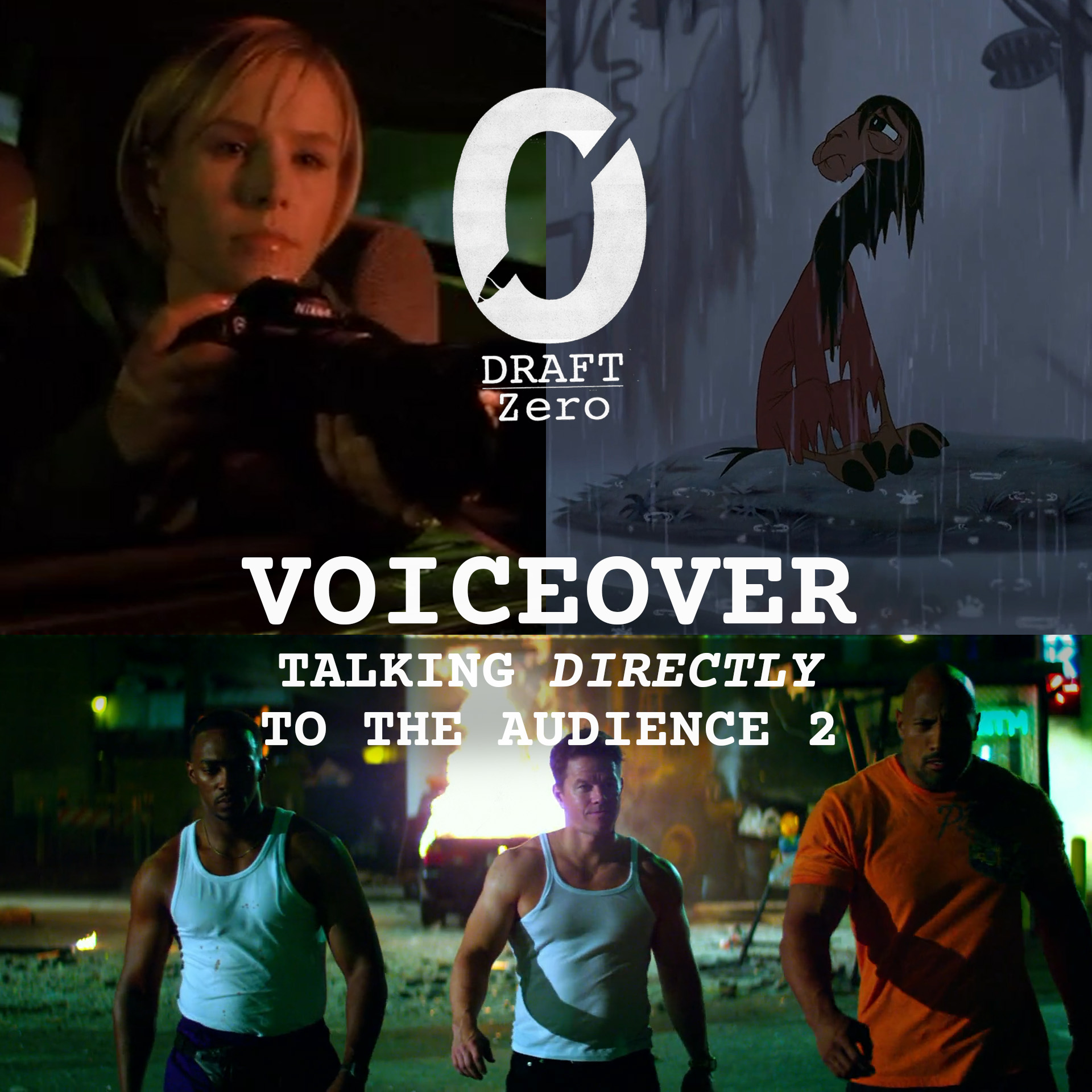
AIChas, Stu, and Mel apply four levers to distinguish when voiceover works as character revelation rather than expository shortcut, using Veronica Mars, The Emperor’s New Groove, and Pain & Gain as models.
⏱ 1h 41m
Character · Audience · Words | 31 MAY 2024
Listen to explore how voiceover can set tone, reveal character, enhance empathy, and create tension.
More Info
DZ-109: Talking DIRECTLY to your audience
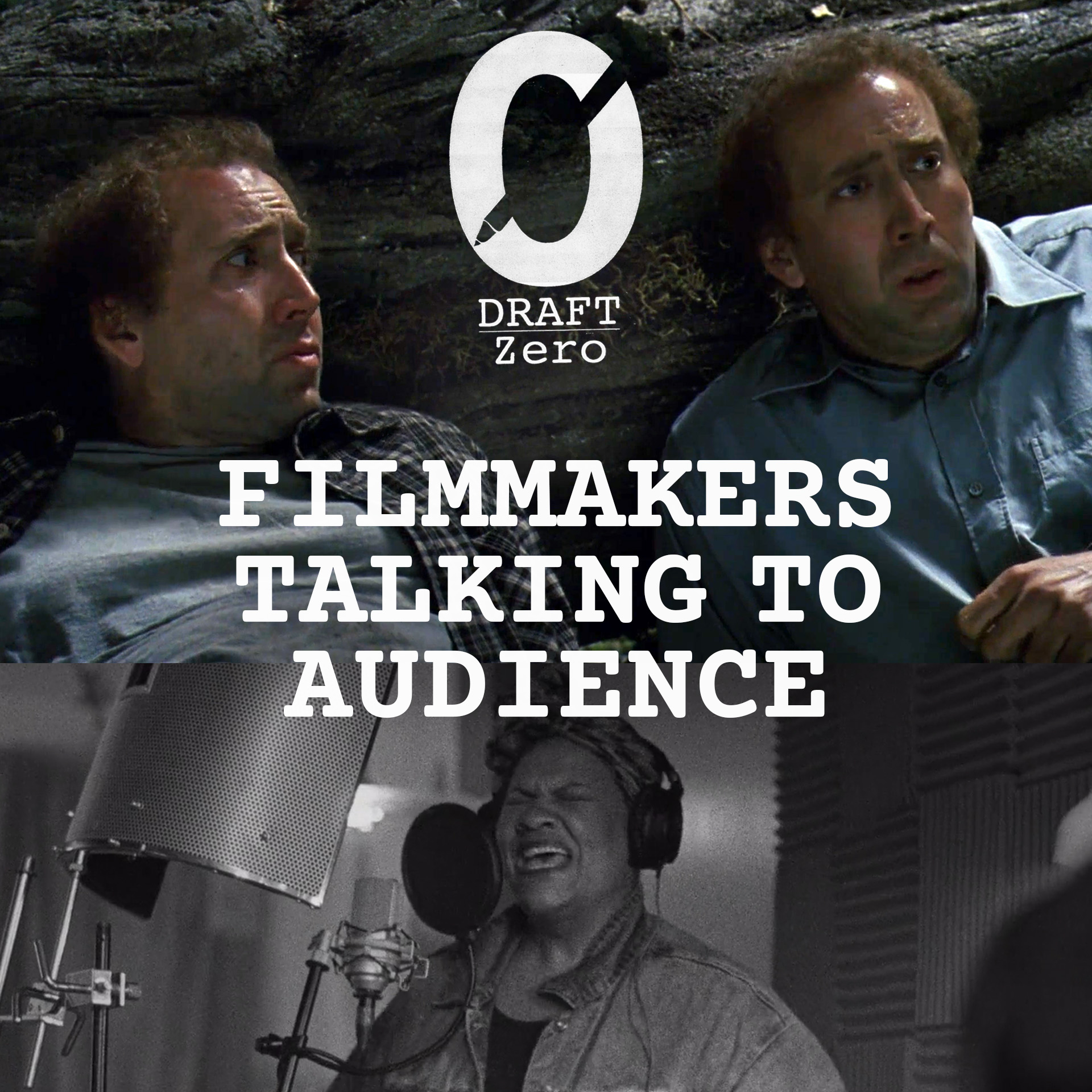
What are the different ways a filmmaker can ask something of the audience?
AIChas and Stu build a taxonomy of direct audience address by isolating four levers: diagetic to non-diagetic, who is talking, whom they’re talking to, and when in time the communication originates.
⏱ 1h 20m
Words · Character · Structure | 1 MAY 2024
Listen if you've wondered what a character actually wants when they're talking directly to the audience!?
More Info

2014

DZ-16: Masters of Time and Whitespace
Does manipulating time on the page make your script feel more cinematic?
AIKhrob Edmonds and the hosts center white space as a primary tool for manipulating time on the page, showing how strategic blank space recreates cinema’s pacing.
⏱ 1h 49m
Words · Genre · Process | 16 DEC 2014
Listen to learn how screenwriters use whitespace to recreate cinema's manipulation of time on the page.
More Info