
Genre
Every episode tagged Genre, newest first.
2025
"The Banishment is actually talking about the banishment of the sources of antagonism."
— Chas Fisher | DZ-121: Escalating Antagonism in SINNERS
DZ-122: Escalating Antagonism Across Genres
▶ More Info
DZ-121: Escalating Antagonism in SINNERS
▶ More Info

DZ-117: Pulling Off Tonal Shifts
▶ More Info

DZ-116: Writing Physical Comedy
▶ More Info
2023
"It’s making sure that the links in the chain, which is what you need to make it want to work, if you want to feel like it’s motivated, they’re doing it on the page."
— Stu Willis | DZ-101: Oners - Creating Immediacy & Anchoring Action on the Page
DZ-105: Establishing Tone through Big Print
▶ More Info
DZ-101: Oners - Creating Immediacy & Anchoring Action on the Page
▶ More Info

DZ-98: Ensembles 3 - Character Function & Theme
▶ More Info
DZ-97: Ensembles 2 - Servicing Characters
▶ More Info
2022
"And it does all of that with fucking butt plug action sequences and hot dog fingers."
— Chas Fisher | DZ-90: Setups & Payoffs in EVERYTHING EVERYWHERE ALL AT ONCE

DZ-95: Backmatter - Building and Maintenance
▶ More Info
DZ-94: Talismans (Part 2)
▶ More Info
DZ-93: Talismans (Part 1)
▶ More Info
DZ-90: Setups & Payoffs in EVERYTHING EVERYWHERE ALL AT ONCE
▶ More Info
DZ-89: Opening Sequences
▶ More Info

DZ-88: Drama in Genre clothing
▶ More Info
DZ-87: Keeping Genre Fresh
▶ More Info
2021

DZ-77: Backmatter - Prioritising and choosing projects
▶ More Info
2020

DZ-75: Fury Road & Visual Storytelling
▶ More Info

DZ-70: Joker & Melodrama
▶ More Info
DZ-66: The Mandalorian and The Rise of Skywalker - Audience Knowledge vs Character Motivation
▶ More Info
DZ-65: Collaborating with a Director - The Snip
▶ More Info
2019
DZ-61: Unfilmables 2 - Moments of Awe
▶ More Info

DZ-59: Avengers Endgame - Ending Character Journeys
▶ More Info
2015
DZ-28: Containing Your Script
▶ More Info
DZ-27: Competing views on Screenplay Competitions
▶ More Info
DZ-26: Horror and Collaboration- Wolf Creek 2
▶ More Info
DZ-25: Coincidences, Contrivances & Giant Eagles
▶ More Info
DZ-24: Forging story rules in TV pilots
▶ More Info
DZ-22: Romantic Comedy, Actually
▶ More Info
DZ-18: Michael Bay - F*ing the Frame and P*ing the Page
▶ More Info
DZ-17: Where's my gold-plated ensuite?
▶ More Info
2014
"The mirror image is her on land, back on Earth, standing up and being surrounded by sound. And that’s something that they’ve done a very good job of in the film. It’s not as written as much on the script, but the sound plays a particularly important role in creating that contrast."
— Stu Willis | DZ-2: Do the Screenplay Gurus score big at the Box Office?
DZ-16: Masters of Time and Whitespace
▶ More Info
DZ-12: Craft, Career and Coffins
▶ More Info
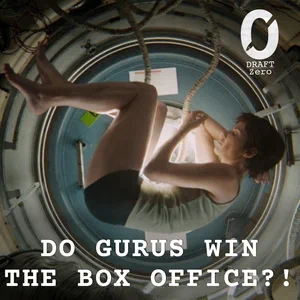
DZ-2: Do the Screenplay Gurus score big at the Box Office?
▶ More Info